


Find Your Ecoregion
Enter your ZIP code to learn your EPA Level II Ecoregion and get your Keystone Plant List. You'll see which native plants thrive in your local climate and soils.
Find Your Level II Ecoregion:

What are ecoregions?
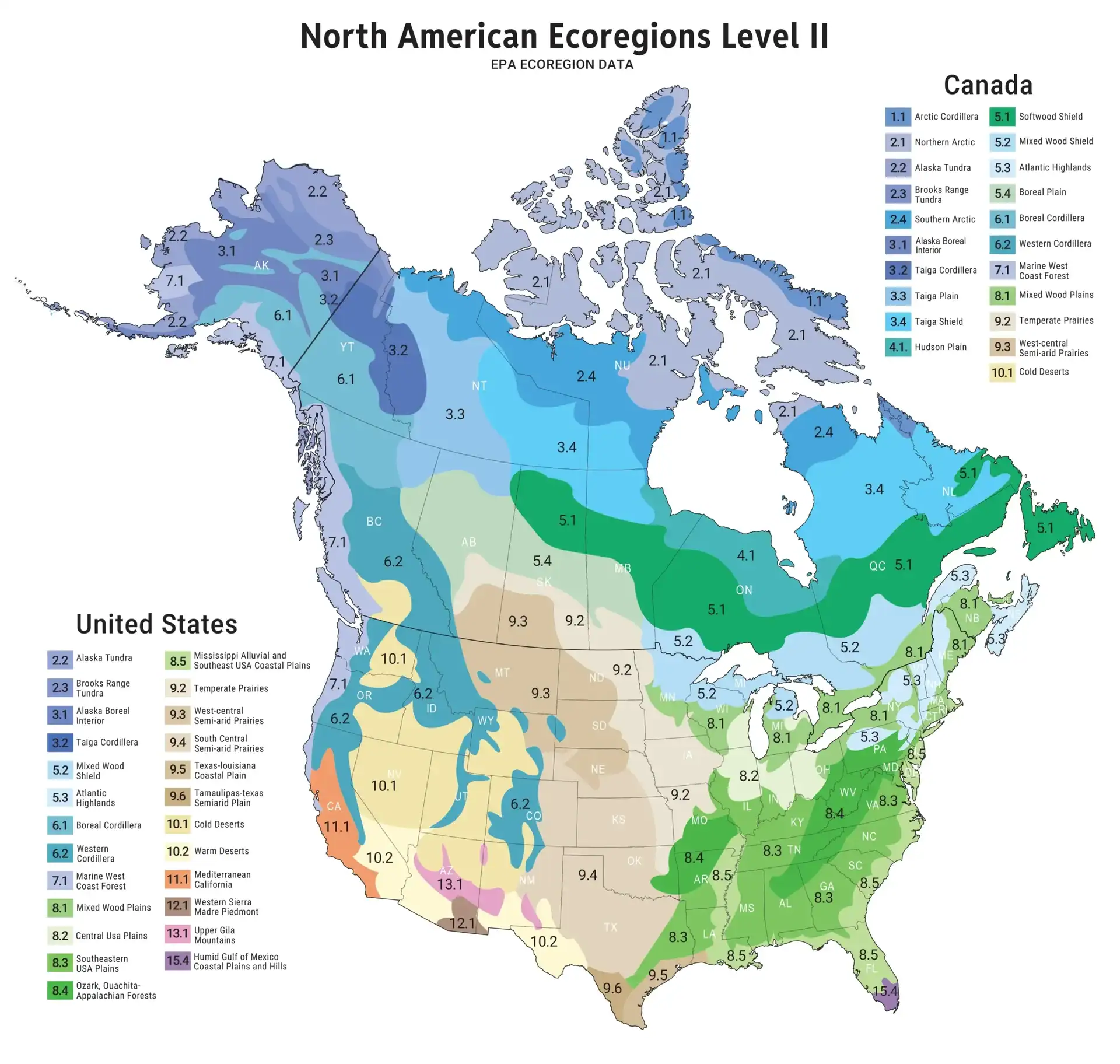
An ecoregion is a geographic area with shared ecological traits. Climate, seasons, topography, soils,and typical plant and animal communities are similar within the region. We use EPA Level II because it balances accuracy and simplicity for home planting.
Why use ecoregions?
-
Plants respond to things like soil, rainfall, and temperature. State or county boundaries are typically not based on environmental conditions.
-
Choosing plants by ecoregion improves fit. You get plants that establish better and support more wildlife.
-
A single state can include very different habitats. Ecoregions group places that share similar conditions.
FAQs
Will this match my state's native plant lists?
Not always. A plant can be native to your state yet not suited to your ecoregion. Follow the ecoregion match first.
What if my ZIP is near a boundary?
Check your site conditions. If both adjacent ecoregions share a plant, choose it. When in doubt, prioritize plants that occur across both.
How precise is the match?
ZIP to ecoregion gives a practical starting point, but your site's sun, soil, and moisture still matter.
Where do I pick plants?
Use the North American Keystone Plants page. Enter your ZIP code, then filter by your site conditions.
Cartography by KickMap, LLC using ESRI's ArcMap v10.3. Data used were modified EPA Ecoregion Level II.
U.S. Environmental Protection Agency (2001). NA_Eco_Level2. vector digital data. U.S. EPA Office of Research & Development (ORD) - National Health and Environmental Effects Research Laboratory (NHEERL).