

What’s happening
The steady loss of species (biodiversity loss) weakens the critical relationships between remaining species, including humans, resulting in declining health and, in some cases, extinction.
Insect populations are declining in many regions¹
Bird populations have dropped significantly over the past decades²
Natural areas continue to be lost or fragmented³
These changes are gradual, but they affect the systems that support life.
Why it matters where you live
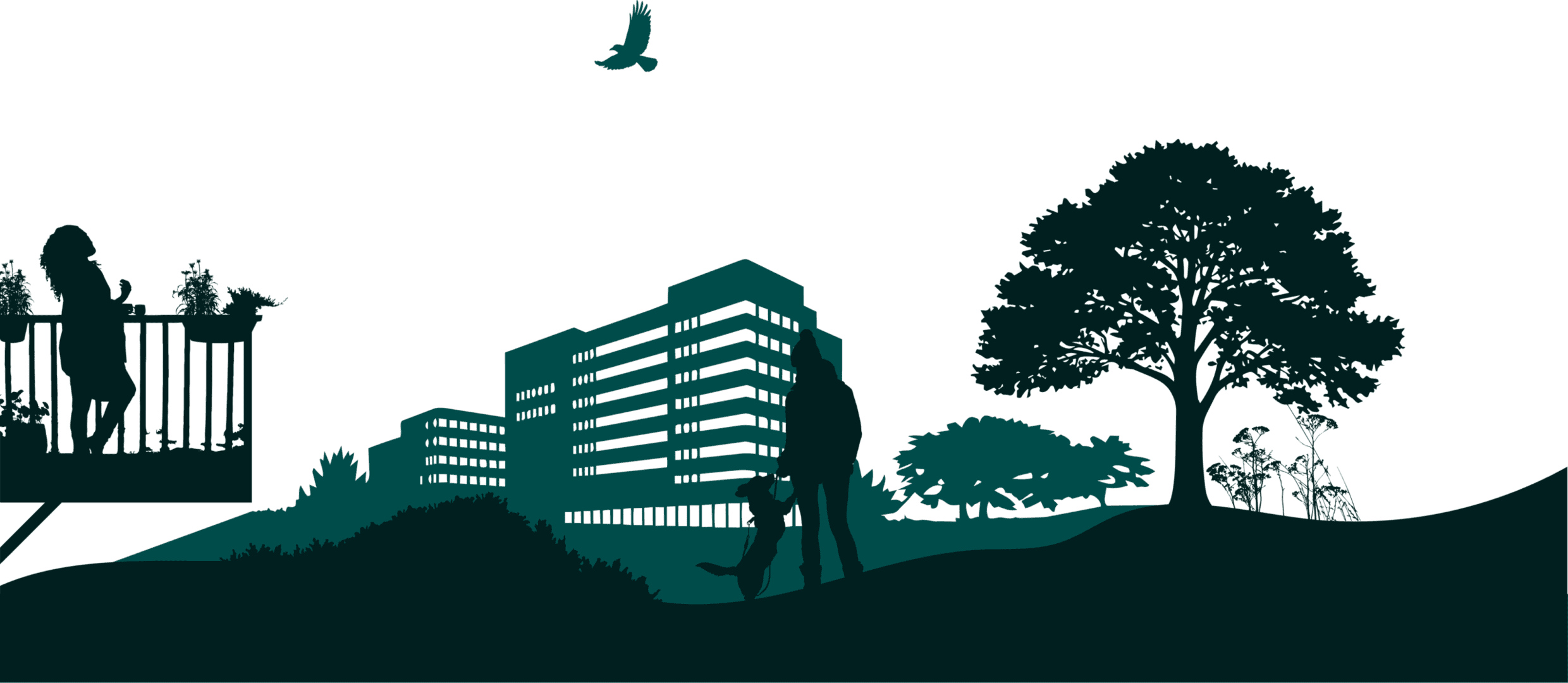
Much of the land where we live is no longer supporting the diversity of life it once did.
The U.S. contains an estimated 135 million acres of residential landscape⁴, much of it managed as lawn. These areas provide less food and habitat for insects and other wildlife than native plant communities.
At the same time, natural habitats are being reduced and fragmented. Protected lands play an essential role, but they are not large or connected enough on their own to sustain biodiversity over time.
Protected lands alone cannot sustain biodiversity.
The opportunity
Most land in the United States is privately owned⁵. This means the future of biodiversity depends largely on how land is managed outside of protected areas.
When individuals change how they manage their space, those actions begin to connect. Across many properties, small changes can reconnect habitat and support ecological function at a broader scale.
By The Numbers
How everyday landscapes add up
135 Million
acres of residential landscape in the United States⁴
40-50 Million
acres of lawn, one of the largest managed land covers in the country⁶
3 Billion
fewer birds in North America since 1970²
By The Numbers
How everyday landscapes add up
135 million acres of residential landscape in the U.S.⁴
40–50 million acres of lawn, making it one of the largest managed land covers in the country⁶
3 billion fewer birds in North America since 1970²
Sources
- Sánchez-Bayo, F. & Wyckhuys, K.A.G. (2019). Worldwide decline of the entomofauna: A review of its drivers. Biological Conservation.
- Rosenberg, K.V. et al. (2019). Decline of the North American avifauna. Science.
- U.S. Geological Survey / USDA land use and land cover change data (various studies on habitat loss and fragmentation).
- U.S. EPA / U.S. Census estimates, as cited in Tallamy, D. (2020). Nature’s Best Hope.
- USDA Economic Research Service. Major Uses of Land in the United States.
Milesi, C. et al. (2005). Mapping and modeling the biogeochemical cycling of turf grasses in the United States. Environmental Management.
Related
Get started planting native

Choose plants that make a difference

Explore the Biodiversity Map
Bring this to your community