


By Tim Snyder, Executive Director
Est Read Time: 5 min
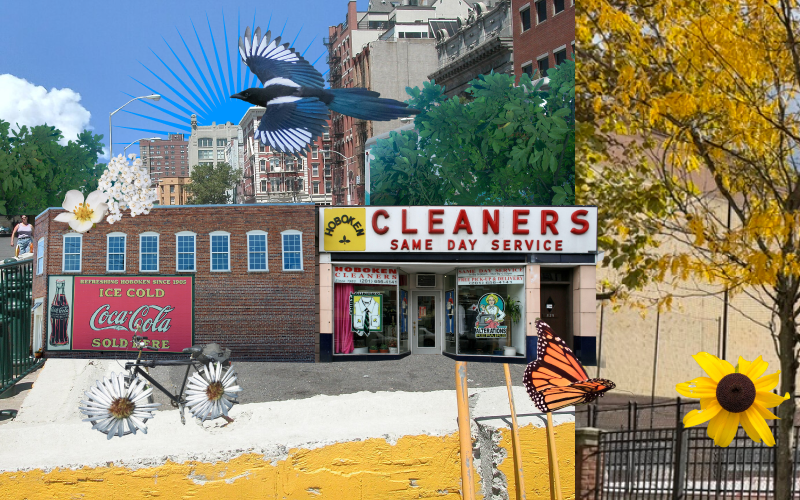
Can you spot these Hoboken, NJ keystones in the cover image? Shagbark Hickory (Carya ovata), White Yarrow (Achillea millefolium), Black-Eyed Susan (Rudbeckia hirta), Calico aster (Symphyotrichum lateriflorum), Scarlet Strawberry (Fragaria virginiana)
My son Tenzin gave a TED-Ed talk at his school not long ago. He is in 10th grade, and the assignment was to imagine something. Something that doesn't exist yet, but could. Or should.
He imagined Hoboken, NJ covered in native plants.
Not a park. Not a garden. The whole city. Rooftops, sidewalk strips, vacant lots, window boxes, every square foot of green space that the city could offer — all of it planted with the species that support nature.
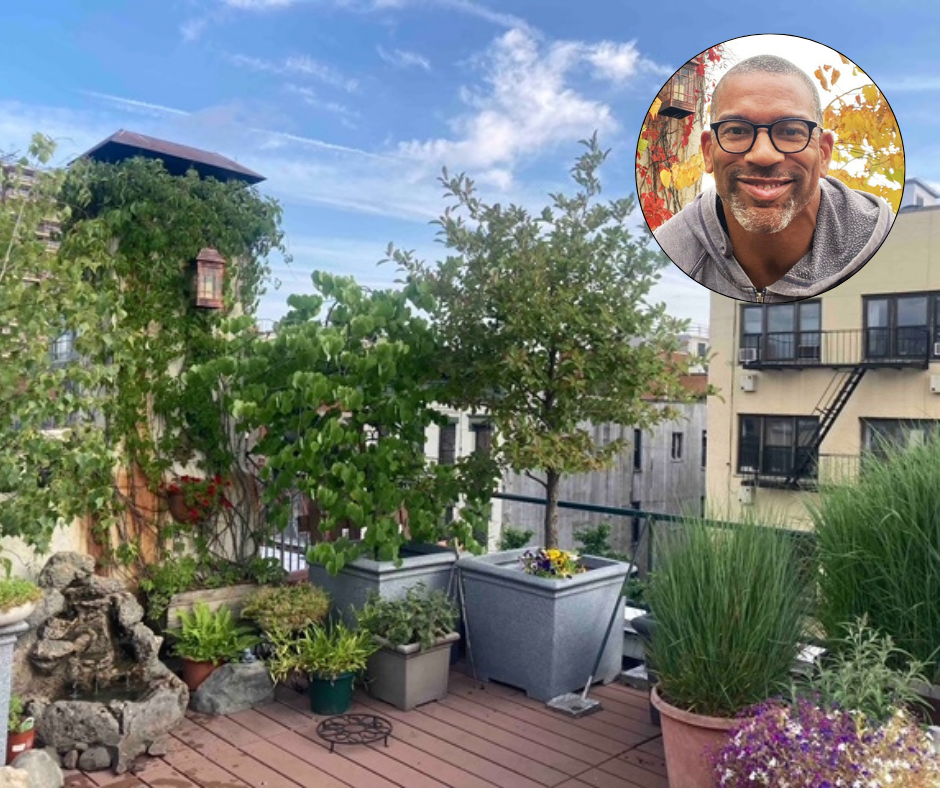
Christian Cooper's rooftop native garden in NYC
He talked about what it would feel like to walk through. How the air might smell. How it would sound. He was thinking about beauty at first, about the pleasure of it, the way a place like that would just feel better to live in.
But then something shifted in his thinking. And honestly, it shifted mine too when I watched him work through it.
He started asking: what would actually happen? Not just to the people, but to the insects, the birds, the soil, the water. He started tracing the connections, from plant to caterpillar to bird to song to kid walking to school under a canopy that's actually alive. And what started as a nice idea, a pleasant thought experiment, became something else entirely.
It became a question about infrastructure.
The systems that run the world aren't the ones we built
We talk a lot about infrastructure. Roads, pipes, power lines, broadband. The systems that hold a community together, that make daily life possible, that we only notice when they fail (remember the Northeast Blackout of 2003).
But there's another kind of infrastructure we've largely stopped seeing. It's the living kind. The oak tree that supports hundreds of species of caterpillars, which feed the birds, which move the seeds, which grow the next generation of plants. The deep-rooted native grasses that absorb stormwater instead of sending it rushing into storm drains. The pollinator corridor that moves life from one yard to the next, from one neighborhood to the next, from one community to the next.
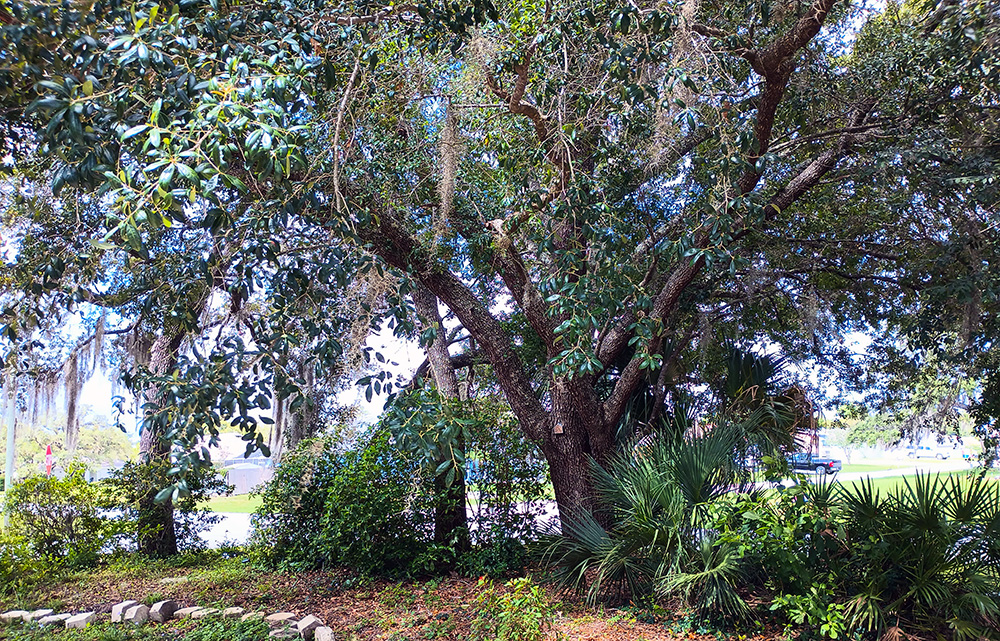
Southern live oak photo from Magrin Crowell in Springhill, Florida
Tenzin actually put a number to this in his talk. He'd interviewed Doug Tallamy while preparing it, and one fact stuck with him: a native oak can support over 500 species of caterpillars.1 A ginkgo, that beautiful, ancient tree you see lining city streets all over the world, supports around 5. Same size tree. Same shade. Completely different ecological contribution.
That's not a small difference. That's the difference between a landscape that feeds life and one that just looks like it does.
A landscape that looks like nature but doesn't work like it
And here's the uncomfortable truth: most of what covers our yards, our streets, and our neighborhoods right now is the equivalent of a ginkgo. Or worse, turfgrass. Forty million acres of lawn across the United States — mowed, fertilized, watered, and almost completely silent ecologically. Imagine if we replaced every bridge in the country with something that looked just like a bridge, had the same graceful lines and reassuring solidity, but couldn't actually be crossed. That's what we've done with our landscapes. We've built the appearance of nature without any of its function. The infrastructure was always there, we just gradually replaced it with something that looks similar but doesn't work.
This is the infrastructure that runs the world. And unlike roads and pipes, individuals and communities can start building it today — in yards, on blocks, in neighborhoods — without waiting for a budget cycle or a policy change. Though make no mistake: if we're serious about treating native habitat as infrastructure, our municipalities and institutions will need to start funding and protecting it like infrastructure too.
"We've built the appearance of nature without any of its function."
Most land is privately owned. That makes it powerful.
Doug Tallamy and Clint Beaty, ecologist and real estate developer, an unlikely pair, have been talking seriously about exactly this. Their conversation starts from a simple observation: the future of biodiversity in this country will be shaped less by what happens inside national park boundaries and more by what happens in neighborhoods and master-planned communities. Most land in the United States is privately owned. That means the decisions we make about our own little patch of ground are, collectively, one of the most powerful conservation forces on the planet.
That's not a burden. That's an invitation.
And here's what makes it even more exciting: it's not a linear thing. It doesn't work like a road, where you build section by section until you connect point A to point B. It works more like a living system, which is exactly what it is. When you plant natives, wildlife returns. When wildlife returns, something happens to people. We notice. We slow down. We start to feel something we may not have felt in a long time, a sense that our place is alive, that we are part of something.
And then we plant more.
One plant. One bird. One neighbor. Then it spreads.
We see this pattern over and over in the Homegrown National Park community. Someone starts with a container on a porch, or a small bed in the front yard. A pollinator shows up. A bird lands. A neighbor asks about it. And suddenly, what began as a small personal choice starts to move through a community like, well, like roots through soil. Quietly, persistently, connecting everything.
This is the positive feedback loop that native plant restoration creates. Plant native → wildlife returns → joy → plant more → more wildlife → more joy → neighbors join in → community joins in → the network grows. It sounds simple because it is. And simple is powerful.
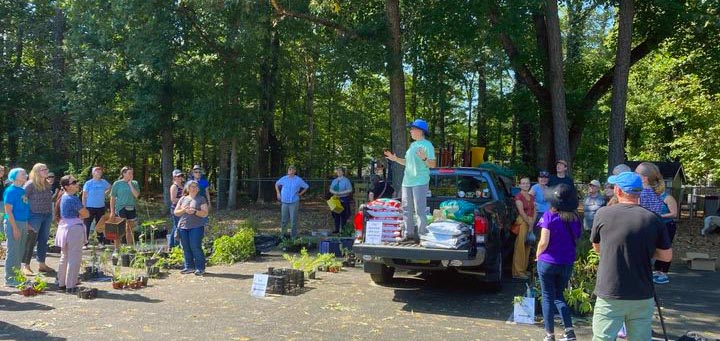
Photo from Sheryl Smith in Henrico, Virginia
Native habitat isn't a nice-to-have. It's a necessity.
At Sunbridge in central Florida, 27,000 acres built around preserved habitat corridors and native landscapes as a foundational design principle, the developers didn't treat conservation as a nice-to-have. They built it in from the start, the way you build in roads and utilities. Because it is infrastructure. It absorbs and filters water. It reduces urban heat. It supports the pollinators that our food systems depend on. It makes a community more resilient in ways that no clubhouse ever could.
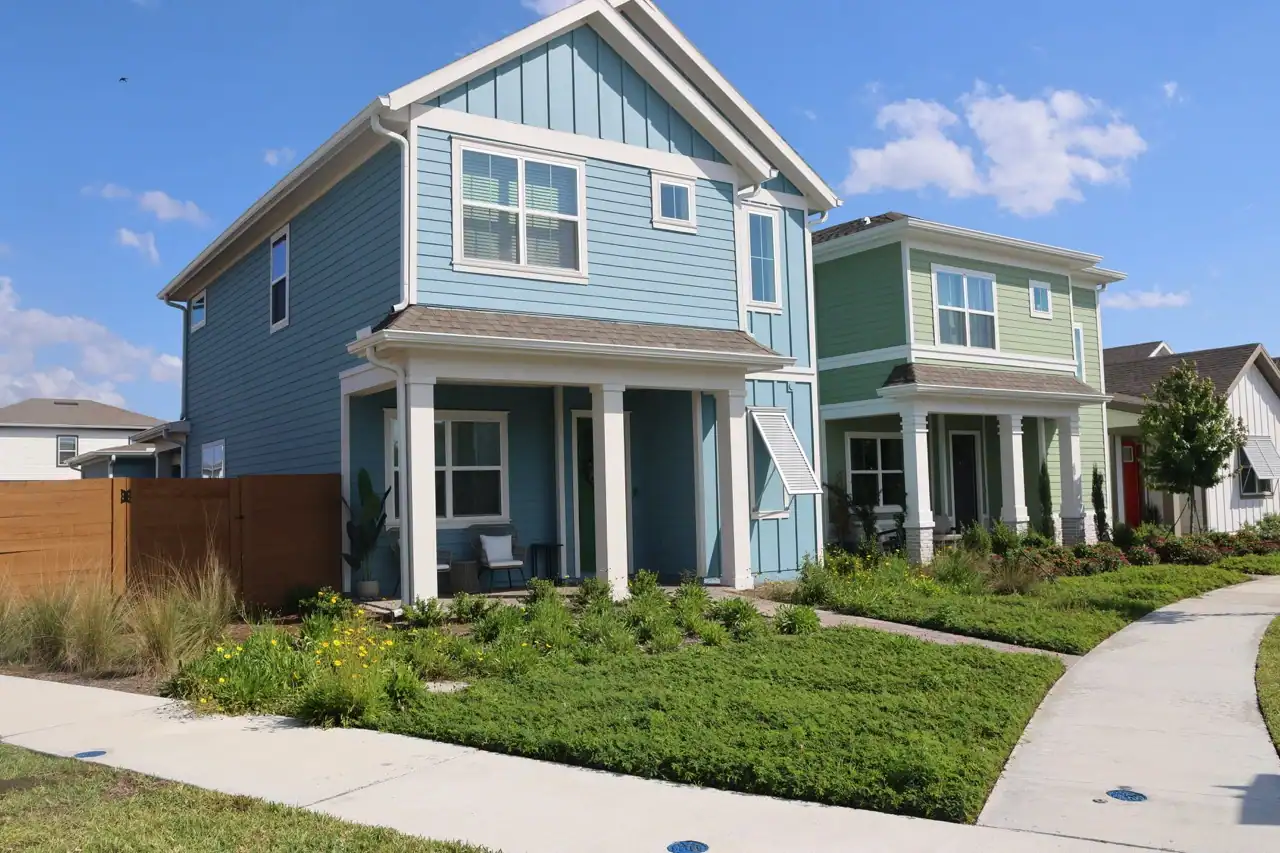
The Sunbridge community builds in native plants as part of its infrastructure
What Sunbridge shows us, and what Tenzin intuited in his Hoboken thought experiment, is that this isn't either/or. You can have a thriving community and a thriving ecosystem. In fact, you can't really have one without the other, not for long.
"Plant native → wildlife returns → joy → plant more → more wildlife → more joy → neighbors join in → community joins in → the network grows."
Local infrastructure connects. That's the whole point of it. A road in your town doesn't just serve your town — it links to other roads, other communities, the national network. Native habitat works the same way. One yard connects to the next. One neighborhood becomes a corridor. One community becomes a node in something much larger. And when enough nodes light up, something extraordinary happens: a national network of living infrastructure, distributed across millions of private properties, held together not by government mandate but by the choices of people who decided that where they live matters.
That's what Homegrown National Park is. Not just a movement. Infrastructure.
So what runs the world?
Caterpillars, mostly. And the oaks that support them. And the birds that need them. And the soil that holds it all. And the people who decided to plant something real.
You're one of those people, or you're thinking about becoming one. Either way, you're in the right place. Start where you are — a container, a corner of the yard, a conversation with a neighbor. Add your space to the Biodiversity Map. Watch what returns.
Then notice how you feel.
And go plant more.
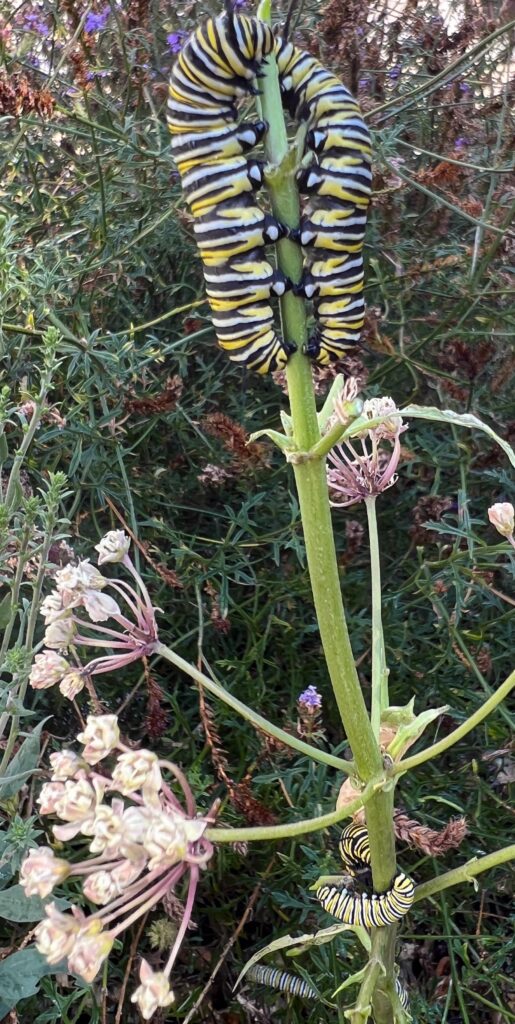
Photo from Lisa Fimiani in Ballona Discovery Park, California
1 Narango, D.L., Shropshire, K.J., and Tallamy, D.W. 2020. Few keystone plant genera support the majority of Lepidoptera diversity. Nature Communications 11: 5751
You may also like:
Order container garden kits from My Home Park
Choose plants that make a difference
Learn why native plants matter
Very nice Tim.
Carol McNichol
Jersey City, NJ
Wild Ones New Jersey Gateway Chapter