

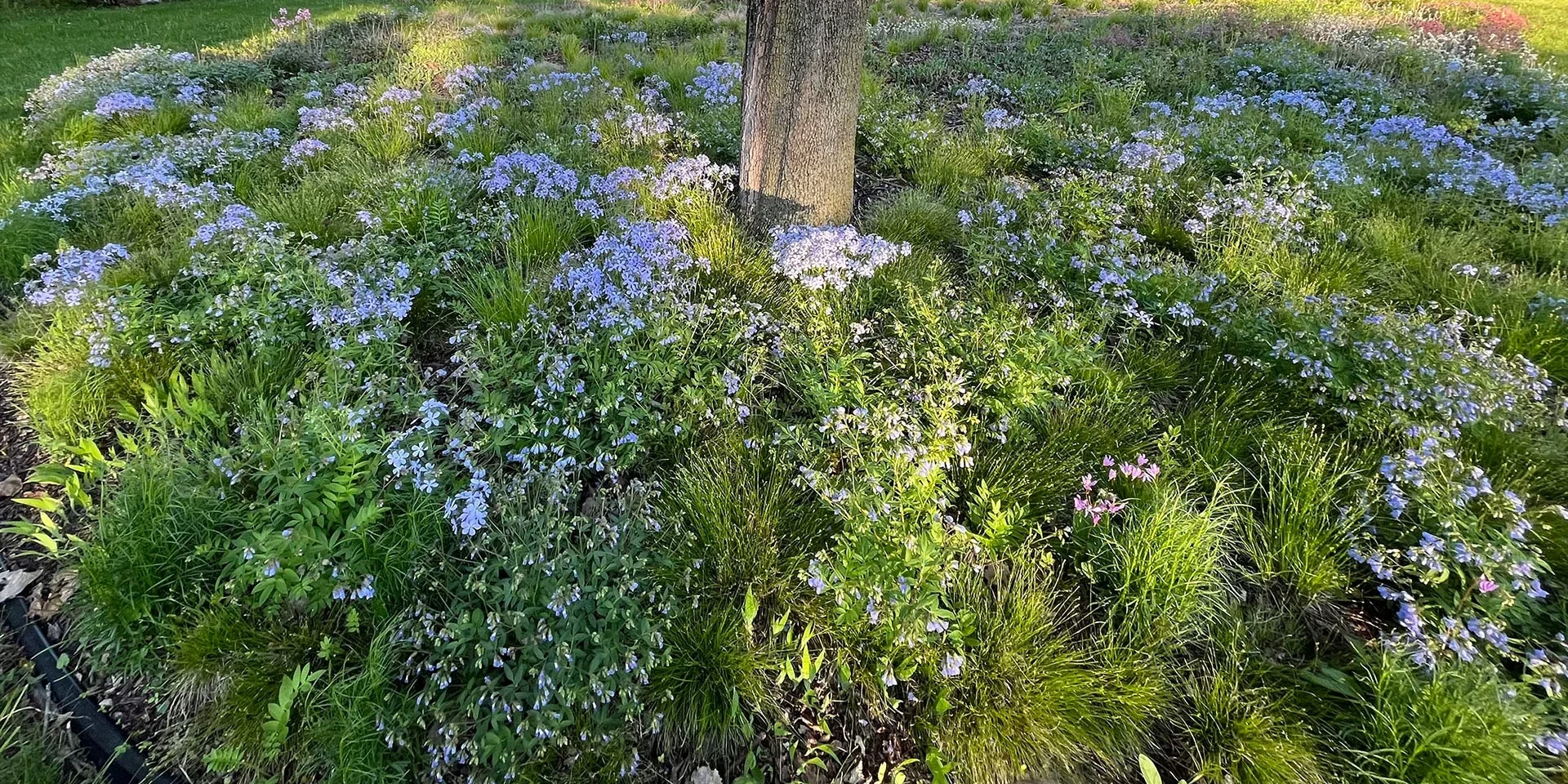
Photo from Dustin Demmer, Blazing Star Gardens | Owatonna, Minnesota
Photo from Dustin Demmer, Blazing Star Gardens | Owatonna, Minnesota
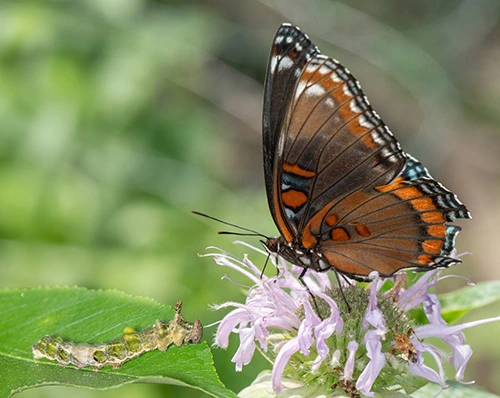
Red-spotted purple caterpillar feeding on a native black cherry leaf (left) and as an adult butterfly (right). Photos from Heather Holm.
What are soft landings
Soft landings are diverse native plantings under native trees, especially keystone trees. They provide shelter and habitat for one or more life cycle stages of moths and butterflies (Lepidoptera), and beneficial insects such as bumblebees, fireflies, and lacewings.
After feeding in the tree canopy, some caterpillars disperse from the tree to pupate in the ground or in leaf litter beneath it. If there's only compacted, regularly mowed turfgrass below, they have nowhere to go.
A soft landing provides caterpillars with the necessary refuge and habitat to pupate, while providing food and shelter for many other beneficial insects.
Soft landings concept developed by Heather Holm and Neighborhood Greening in consultation with Desiree Narango, Ph.D.
What a soft landing does
- Provides beneficial insects a place to forage, shelter, and complete their life cycle
- Feeds birds — soft-bodied insects like caterpillars are the primary food source of most terrestrial birds
- Builds healthy soil through natural leaf litter and fibrous plant roots
- Sequesters more carbon than turf grass
- Reduces mowing
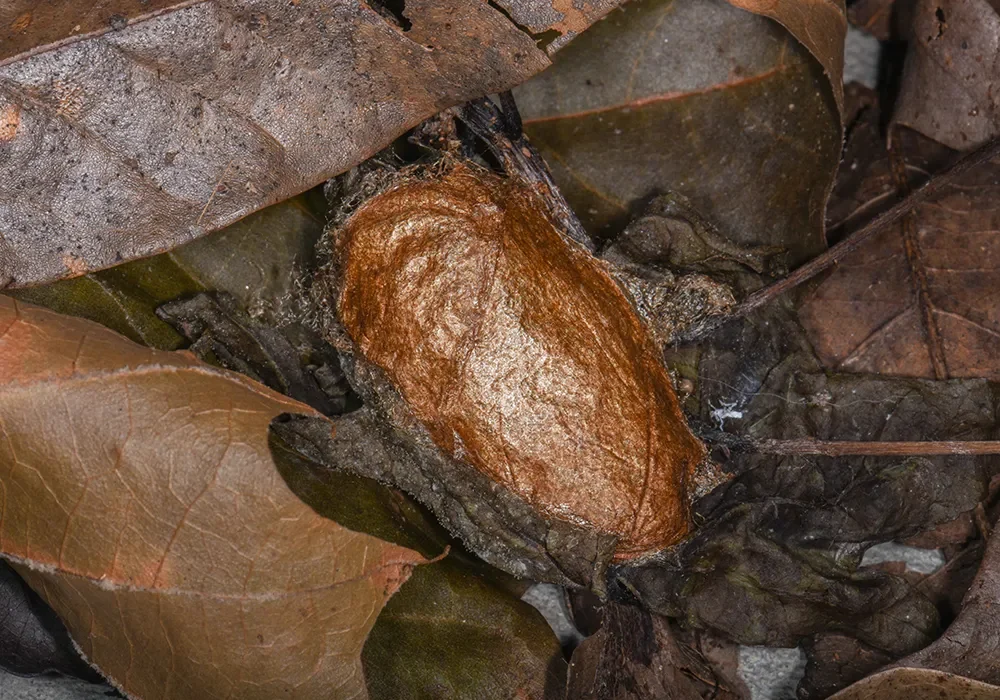
Luna moth cocoon in leaf litter. Photo from Doug Tallamy | Pennsylvania.
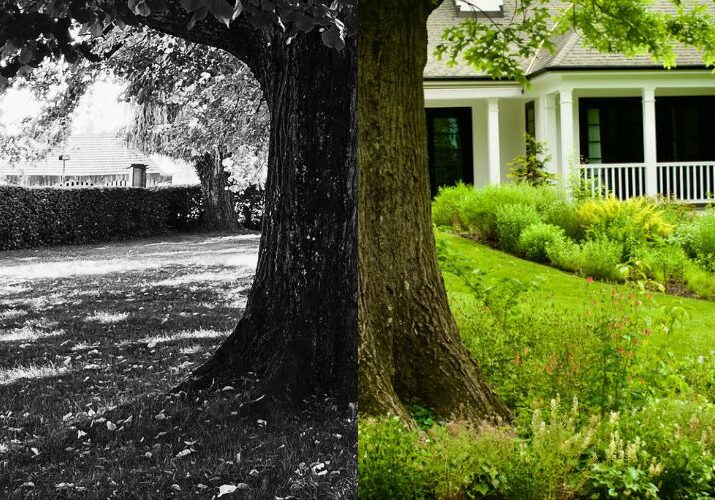
Photo (right side) from Michelle Detwiler | Penn Valley, Pennsylvania
What happens when caterpillars disperse from their host plant?
After feeding in the tree canopy, some caterpillars disperse from the host plant to pupate in leaf litter on the ground.
Without a soft landing
Land on compacted turf
No cover or moisture
Vulnerable to being mowed over
Less likely to survive
With a soft landing
Land on plants and native plants
Insulated, sheltered, protected
Protected from mowing
More likely to complete their life cycle
Why a native tree
Not all trees are equal for wildlife. The majority of moths and butterflies are specialists and can only feed on one or a few native plants. Most non-native ornamental trees support very few.
Even among native trees, some support far more insect species than others. These are called keystone trees. Native oaks are the top keystone tree across the United States, as more than 940 types of caterpillars feed on oaks (Quercus). Native willows, cherries, pines, and poplars are also among the most productive keystone trees.
If you have a native tree, you already have the foundation. A soft landing transforms the ground beneath your native tree into a mini ecosystem—right in your own yard.
Don't have a native tree yet? Planting a keystone native tree is one of the highest-impact actions you can take to support moths and butterflies.
How it all connects
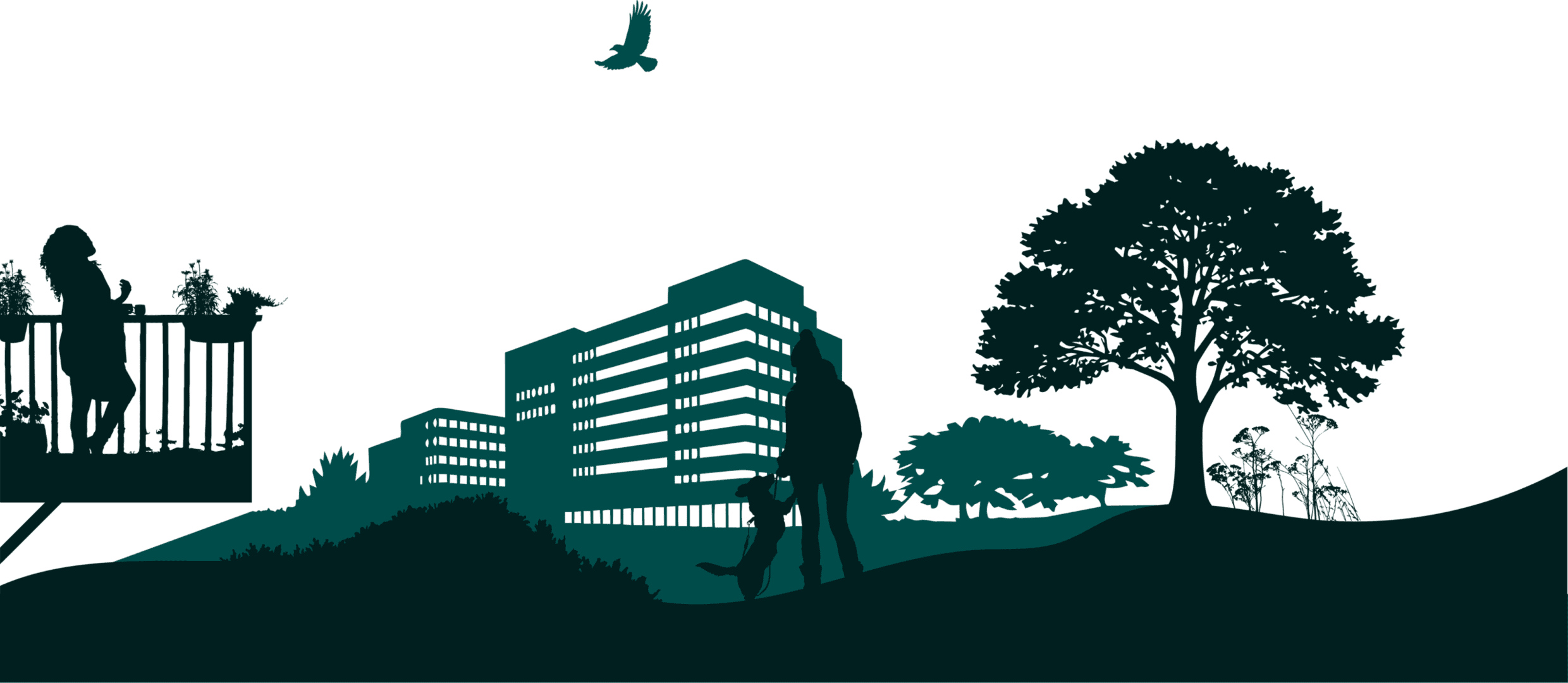
This illustration shows how soft landings support insects, birds, and healthy soil, from the tree canopy to the ground beneath.
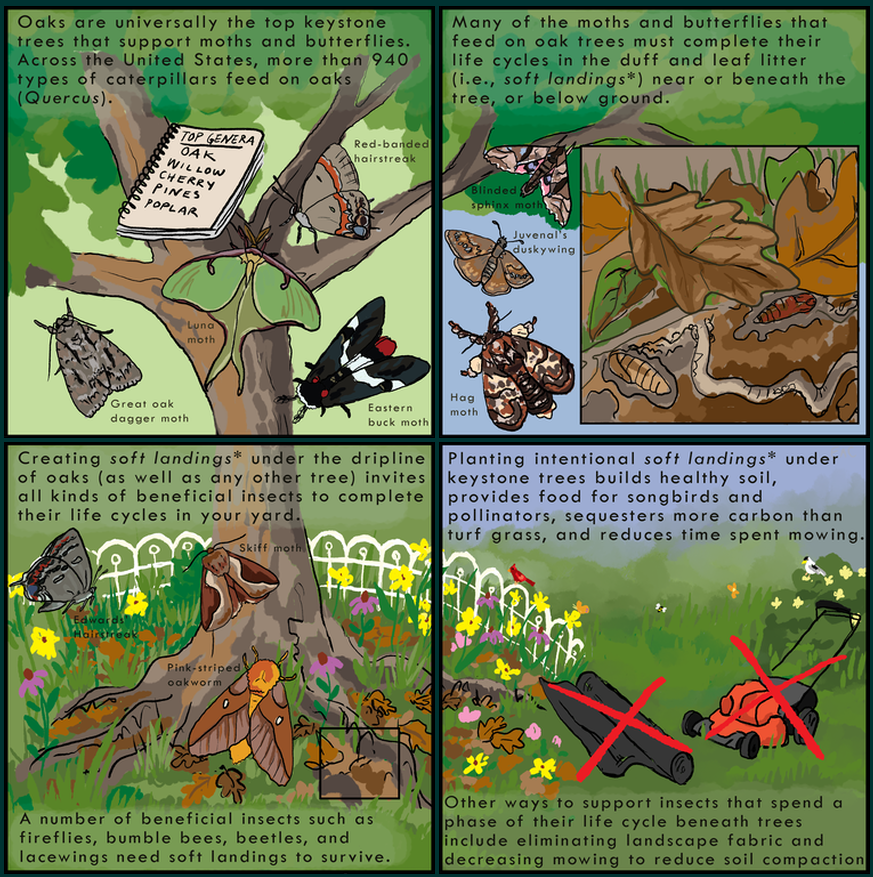
Funded by a grant from Wild Ones Minnesota ©2021 Heather Holm and Neighborhood Greening;
Developed in consultation with Desiree Narango, Ph.D., Artwork by Elsa Cousins.
*For more on creating soft landing plantings under trees, visit: www.pollinatorsnativeplants.com/softlandings.html
How to plant a soft landing
1. Smother the turf — don't dig it.
Cardboard topped with wood chips works well, as does adding a thick layer of leaves. Instead of digging up turf, cover the grass and leave it for a season. This allows turf to break down naturally over time, lessening the risk of damaging the tree's root system. Keep woodchips thin over root zones and keep them entirely away from the trunk, as piled-up mulch against the bark traps moisture and invites rot. Pull any mulch back before you plant. Learn why leaving the leaves matters.
2. Stay three feet from the trunk.
Plant outside the root flare to protect the tree's primary roots. The plants will fill that gap as they establish.
3. Plant small and don’t raise the bed
Tree roots are concentrated in the top several inches of soil. To minimize root damage, use plugs or small cell-pack plants instead of larger plants, and a hand trowel instead of a shovel. Avoid installing shrubs or digging large planting holes within the tree's root zone. Small, shallow holes let you tuck plants in around the roots instead of cutting through them.
Don't add soil or compost on top of the root zone, even to build a raised bed. It can suffocate the tree's roots. Instead, improve the soil naturally with leaf litter, bark, and small twigs.
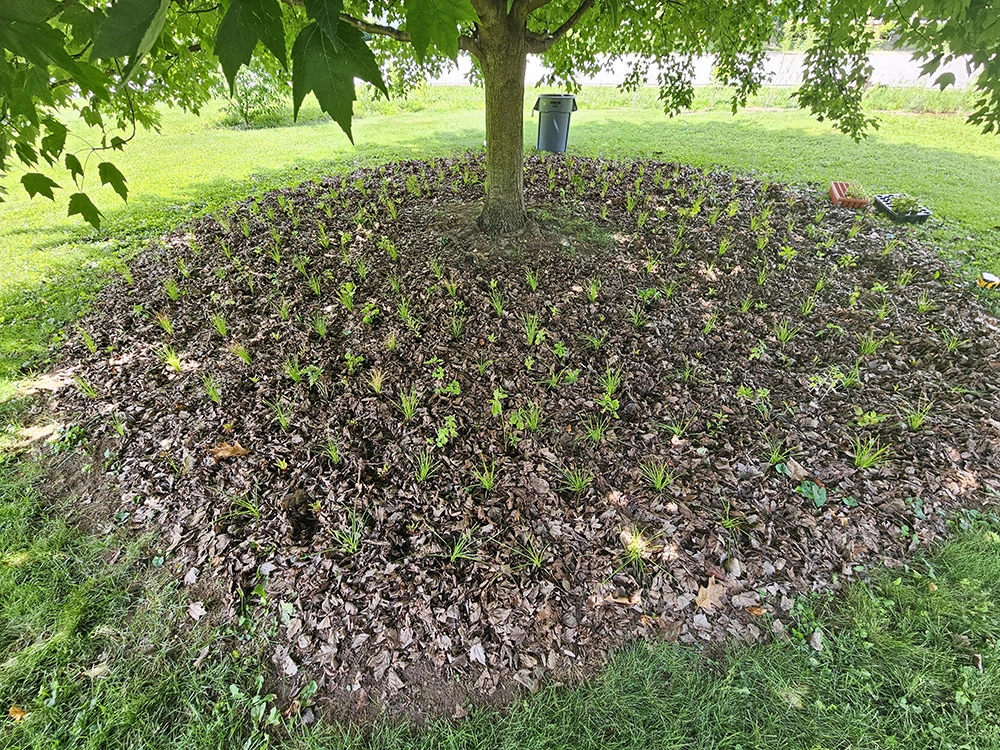
Photo from Richard Bennett | Speedway, Indiana
Choosing plants for your soft landing
Native plants that thrive in both full sun and partially shaded habitats work best for a soft landing planting. The specific native plants depend on where you live.
For the Northeast, Upper Midwest, and northern Mid-Atlantic, Heather Holm and Neighborhood Greening have put together a soft landings-specific plant list and regional handout.
Outside that region, or if you want to explore more broadly, the HNP keystone plant tool covers the whole U.S. It's also a good place to start if you're choosing a keystone tree. Not all keystone plants are shade-tolerant, so check growing conditions for each plant.
Featured soft landing plants
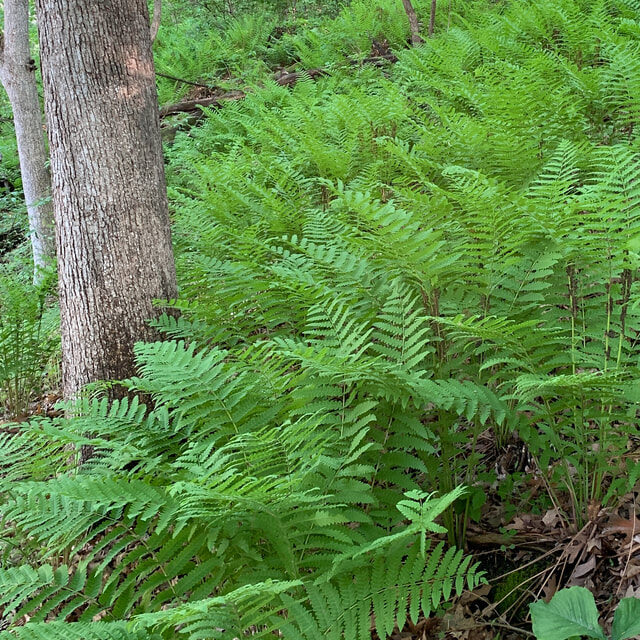
Interrupted Fern
Osmunda claytoniana
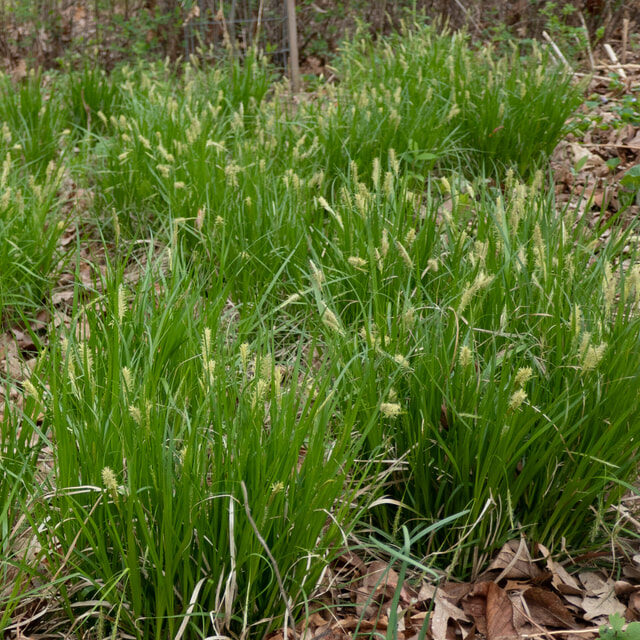
Sedges
Carex spp.
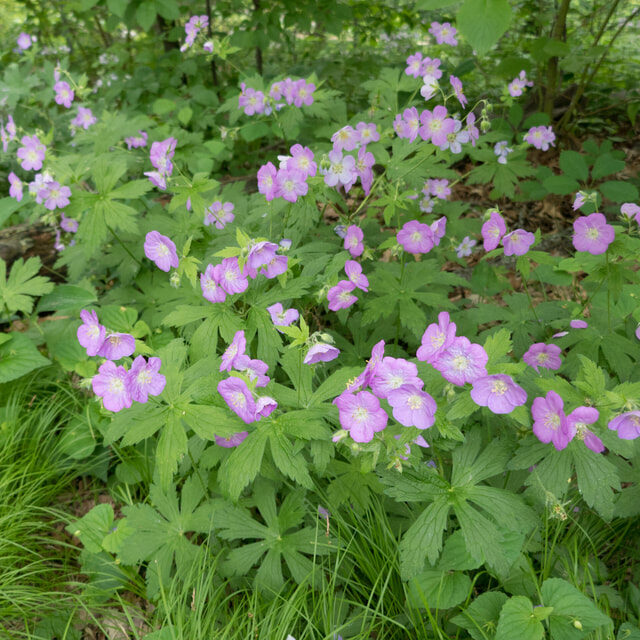
Wild Geranium
Geranium maculatum
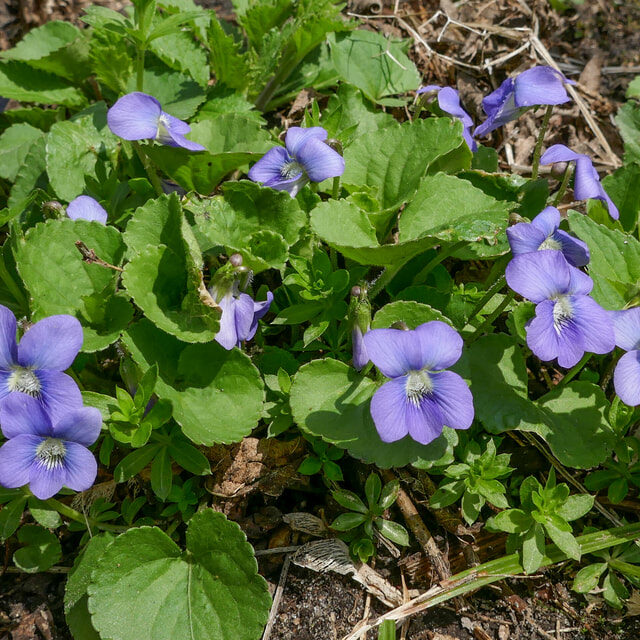
Common Blue Violet
Viola sororia
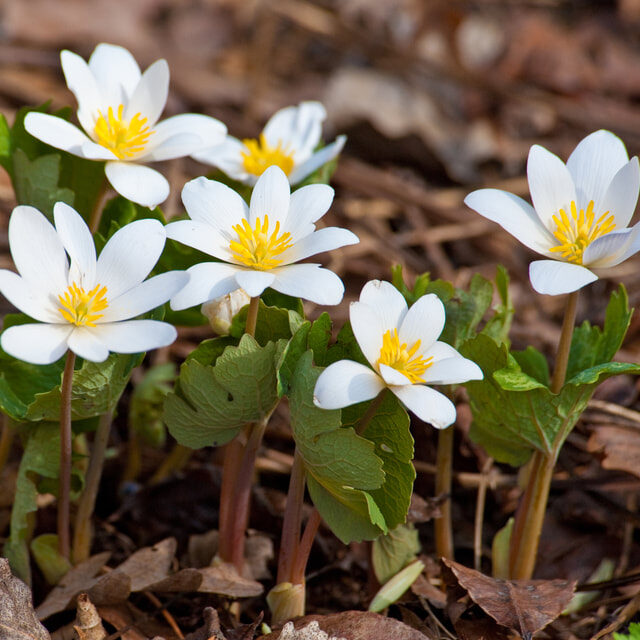
Bloodroot
Sanguinaria canadensis
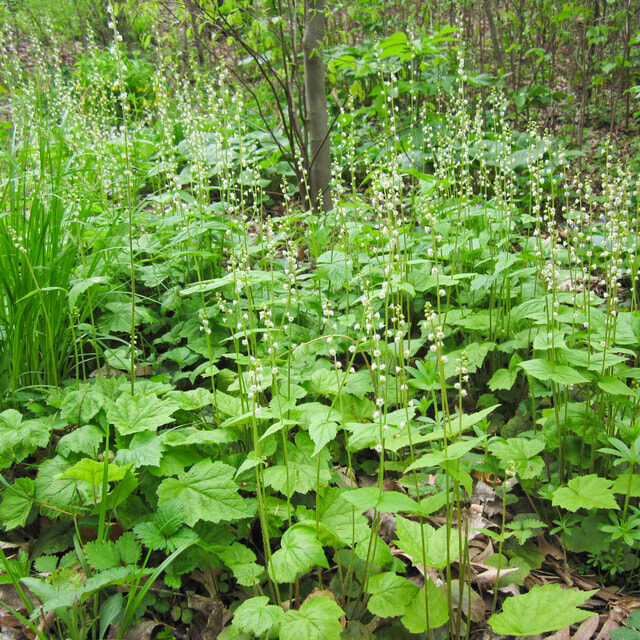
Bishop's Cap
Mitella diphylla
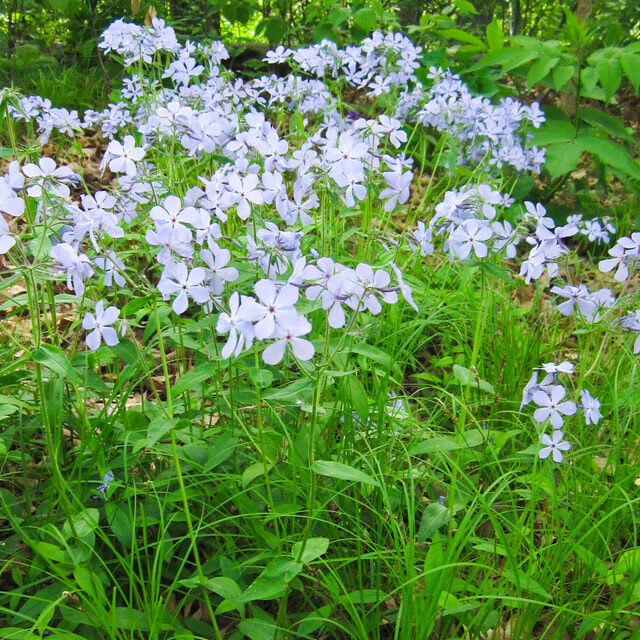
Wild Blue Phlox
Phlox divaricata
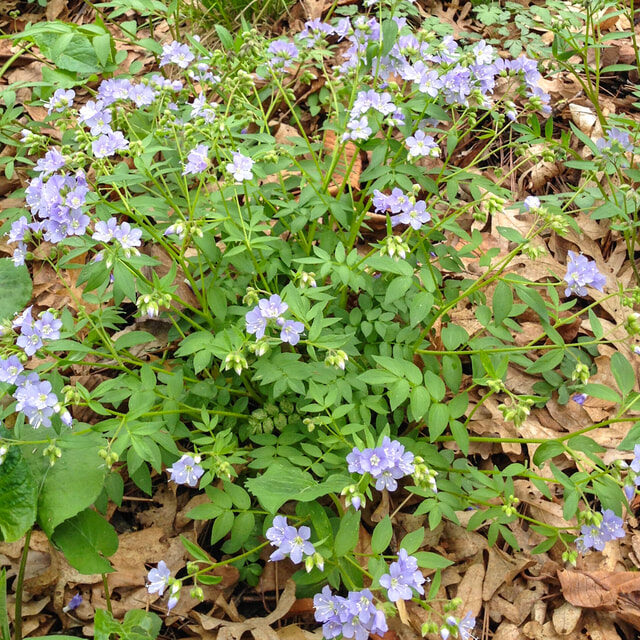
Jacob's Ladder
Polemonium reptans
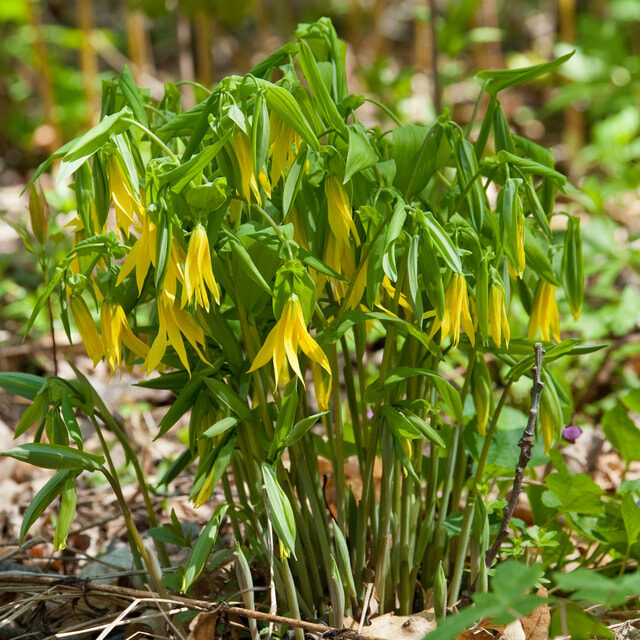
Bellwort
Uvularia grandiflora
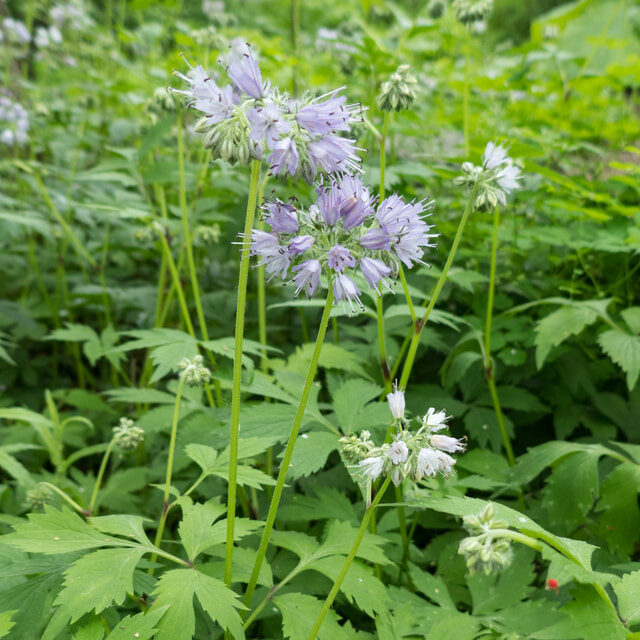
Virginia Waterleaf
Hydrophyllum virginianum
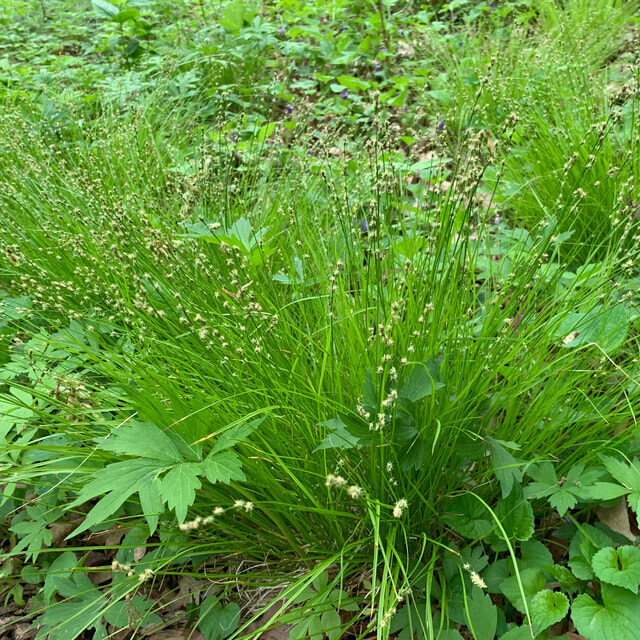
Sedges
Carex spp.
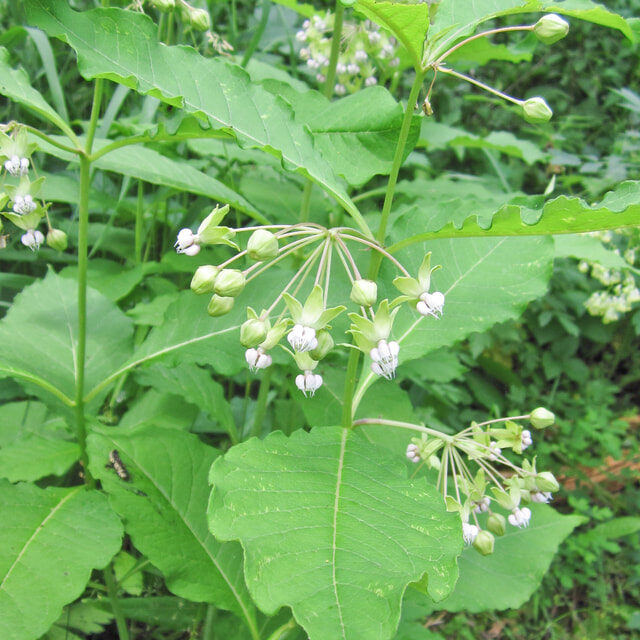
Poke Milkweed
Asclepias exaltata
All images from pollinatorsnativeplants.com
Make your soft landings count
Track Your Impact
You're turning a patch of grass into real habitat. Food and shelter for caterpillars, beneficial insects, and the birds that depend on them.
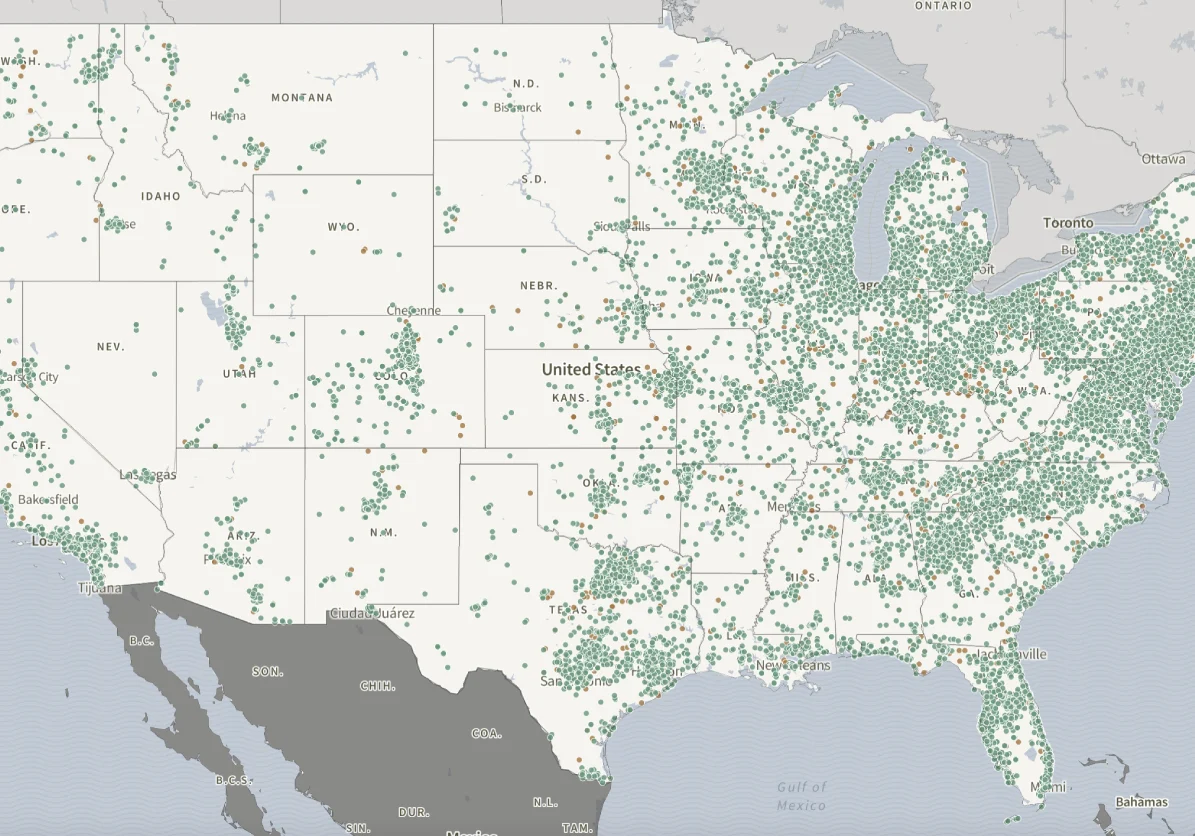
Now add your space to the Homegrown National Park Biodiversity Map, so it counts alongside thousands of others across the country.
Soft landings gallery
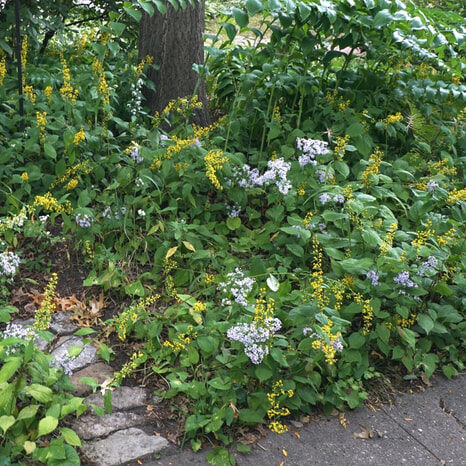
Photo from Vicki B. | Minneapolis, MN. Includes Solomon's Seal (Polygonatum biflorum), Heart-leaved Aster (Symphyotrichum cordifolium), Zig Zag Goldenrod (Solidago flexicaulis) under a Pin Oak.
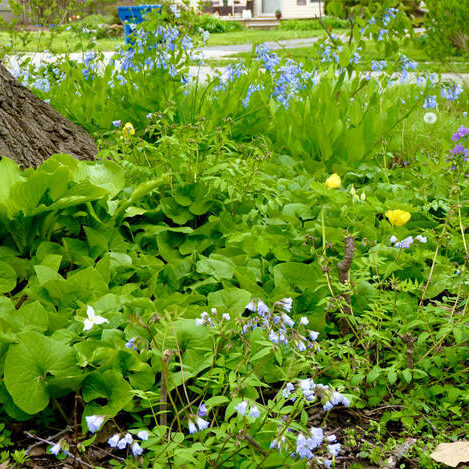
Photo from of Linda McCaughey. Inclusde Celandine Poppy (Stylophorum diphyllum), Virginia Bluebells (Mertensia virginica), Wild Ginger (Asarum canadense) under a Northern Red Oak.
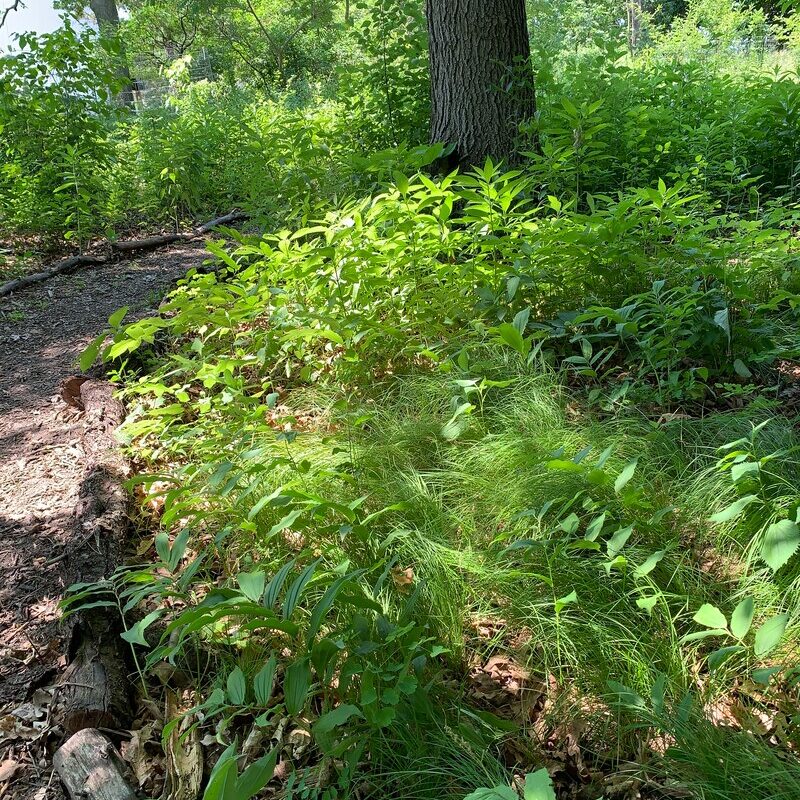
Photo from pollinatorsnativeplants.com. Includes Pennsylvania Sedge (Carex pensylvanica), False Solomon's Seal (Solomon's Plume) under an Oak.
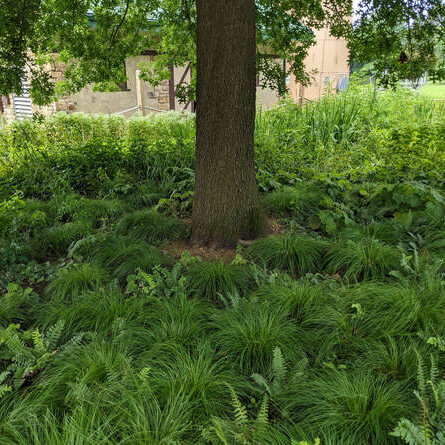
Photo from Lucy Dinsmore | West Grove, PA. Includes White-tinged Sedge (Carex albicans), Christmas fern (Polystichum acrostichoides), Mistflower (Eupatorium coelestinum) under an Oak.
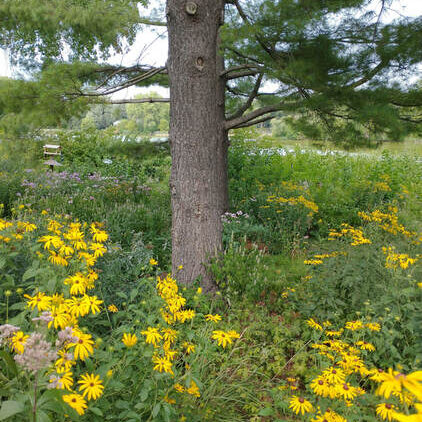
Photo from Diane Stauner | New Hope, MN. Includes Sweet Black-eyed Susan (Rudbeckia subtomentosa), Joe Pye Weed (Eutrochium maculatum), Bee Balm (Monarda fistulosa) under a White Pine.
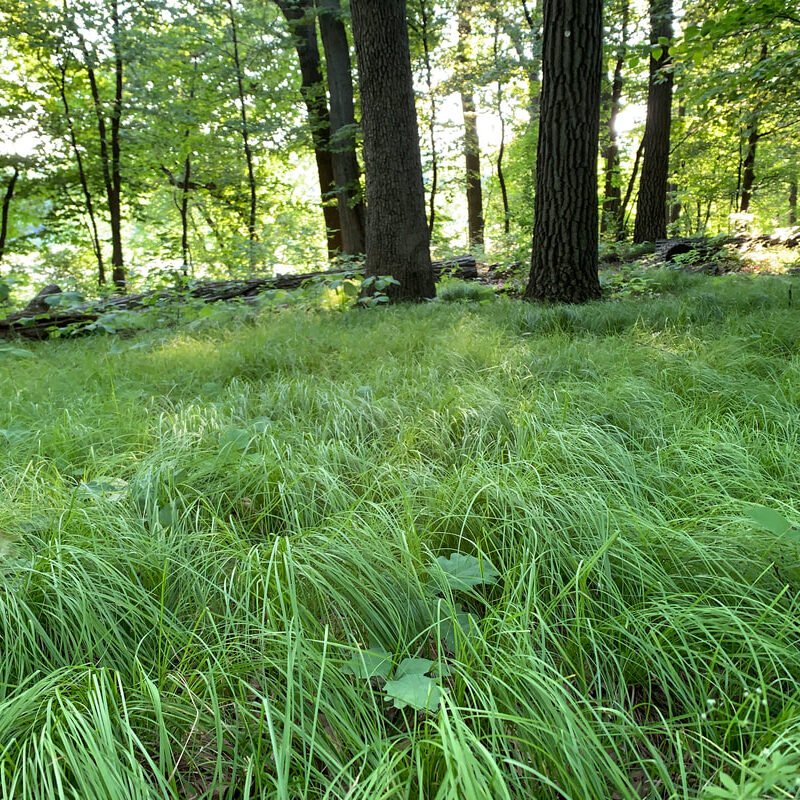
Photo from pollinatorsnativeplants.com. Includes Pennsylvania Sedge (Carex pensylvanica) under Oaks.
More examples and inspiration at pollinatorsnativeplants.com/softlandings
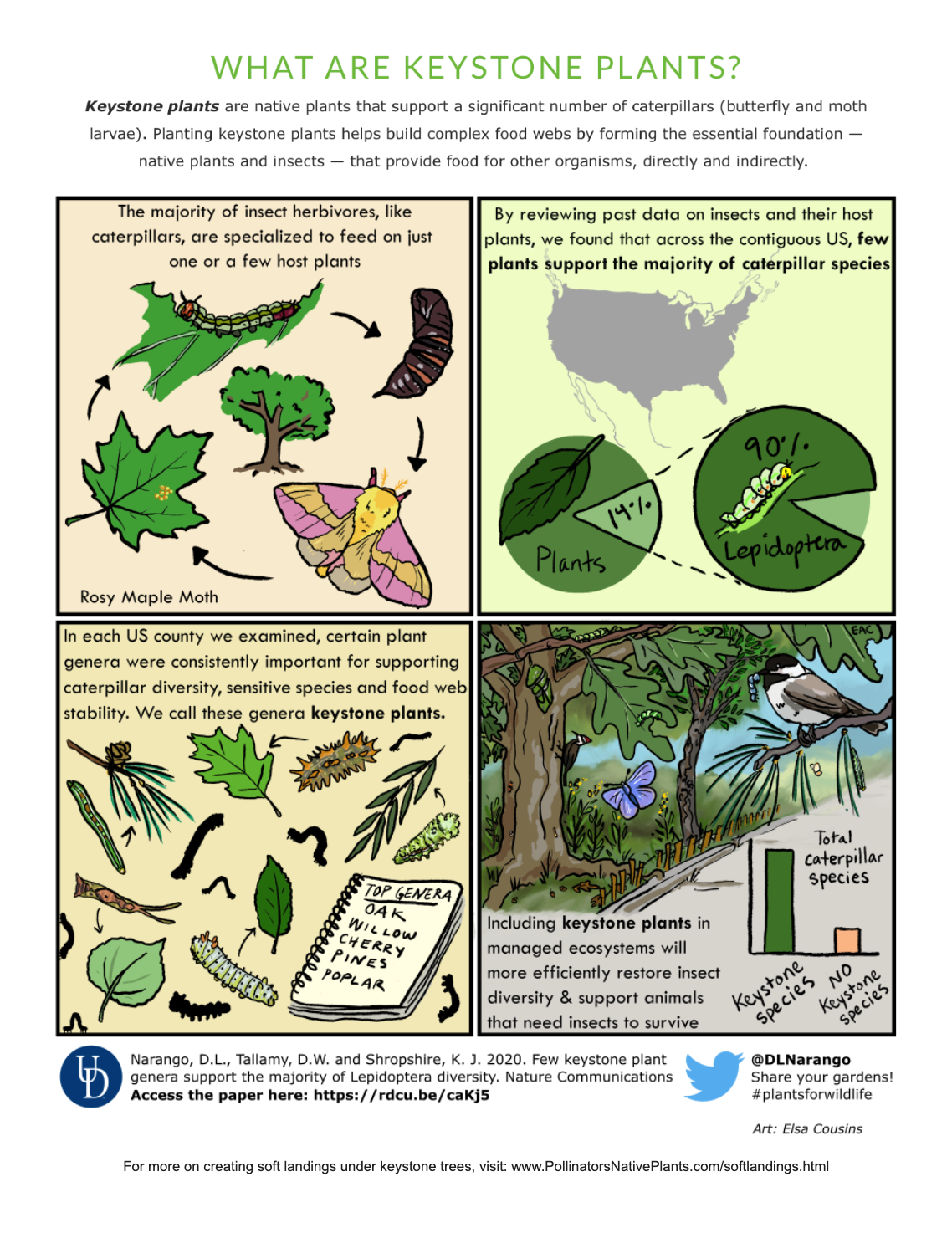
Download the Soft Landings handout
Soft landings concept developed by Heather Holm and Neighborhood Greening in consultation with Desiree Narango, Ph.D. Plant lists and planting guidance sourced from pollinatorsnativeplants.com/softlandings. Follow them on Instagram: @BeesNativePlants, @NeighborhoodGreening, @dlnarango.
Read what worked — and what didn't
Richard Bennett, HNP's Director of Technology, started with one soft landing under a tree in his yard. Two became five, which eventually became eight. Here's his process and what he learned.

Photo from Richard Bennett | Speedway, Indiana
Related
Get started planting native

Choose plants that make a difference

Explore the Biodiversity Map
Bring this to your community