Est. Read time: 5 minutes
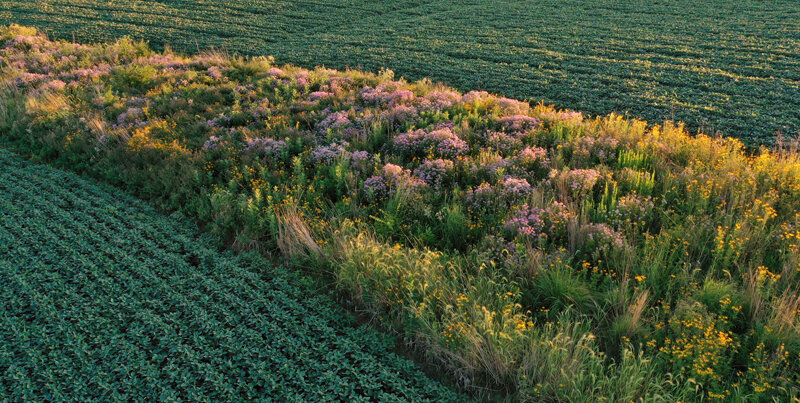
Cover photo: Heartland Ranch Nature Preserve by Lauren McCain
Adding 51,000+ acres of protected shortgrass prairie to Homegrown National Park
We’re excited to welcome the Southern Plains Land Trust (SPLT) to the Homegrown National Park Biodiversity Map. With the addition of more than 51,000 acres of protected shortgrass prairie, SPLT becomes one of the largest contributors on the Map to date.
This is what the Biodiversity Map is all about—showing how individual actions, community efforts, and large-scale conservation work together to restore the living systems we all depend on.
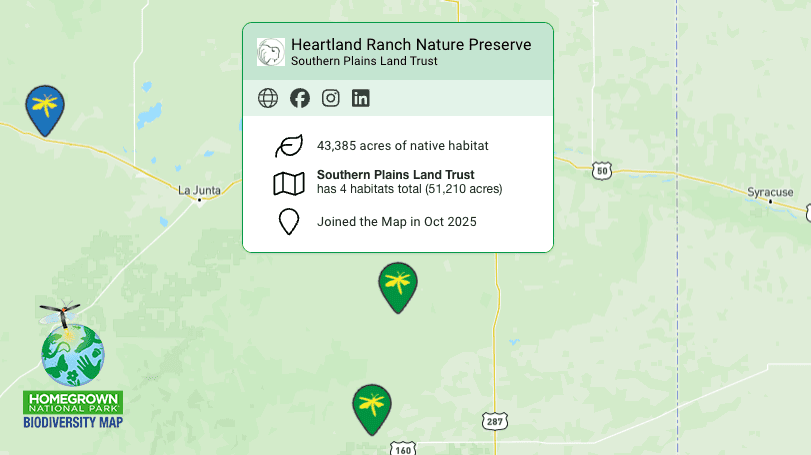
Heartland Ranch Nature Preserve on the HNP Biodiversity Map
Who Southern Plains Land Trust Is
It is Southern Plains Land Trust's mission to protect and rewild the Southern Plains by creating a network of prairie refuges to ensure a future for native wildlife. Piece by piece, they are restoring the American Serengeti.
Southern Plains Land Trust has added four preserves to the Homegrown National Park Biodiversity Map, representing a total of 51,210 acres of conserved land:
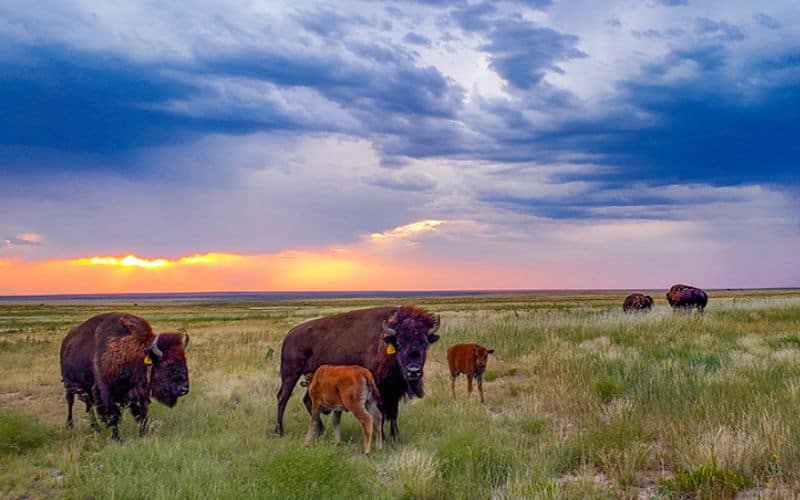
Heartland Ranch Nature Preserve is the largest preserve of the Southern Plains Land Trust, covering 43,385 acres. This is where a herd of bison roams freely and where most restoration activities, such as replanting and wildlife reintroductions, take place.
Raven’s Nest covers nearly 5,000 acres. The preserve features rolling shortgrass prairie, seasonal creeks, and Dakota sandstone outcroppings. It is home to prairie dogs, coyotes, swift foxes, ferruginous hawks, and burrowing owls. Streams support plains leopard frogs, tiger salamanders, and a variety of water-dwelling species. The area also hosts lizards, toads, skinks, snakes, and the western ornate box turtle.
Established in 1998 as SPLT’s first preserve, Fresh Tracks Nature Preserve began with 1,280 acres and expanded to 2,560 acres in 2021. This revitalized preserve features feathergrass, needle-and-thread, and hosts pronghorn, coyotes, badgers, raptors, and prairie dogs. Special plants include native echinacea and Colorado Green Gentian.
The Purgatoire River Preserve is a 493-acre shortgrass prairie property near Las Animas, Colorado. The property contains mature cottonwood riparian forests, high-quality wetlands, and a small black-tailed prairie dog colony. The wetlands are freshwater ponds that stay full throughout the year, which support native fish and other aquatic wildlife and represent a critical resource for both migratory and resident waterfowl and passerine birds. This preserve is on its way to becoming a nature hub for the surrounding community with publicly accessible trails, informational signage, bird-banding workshops, and a prairie education opportunity for local schools.
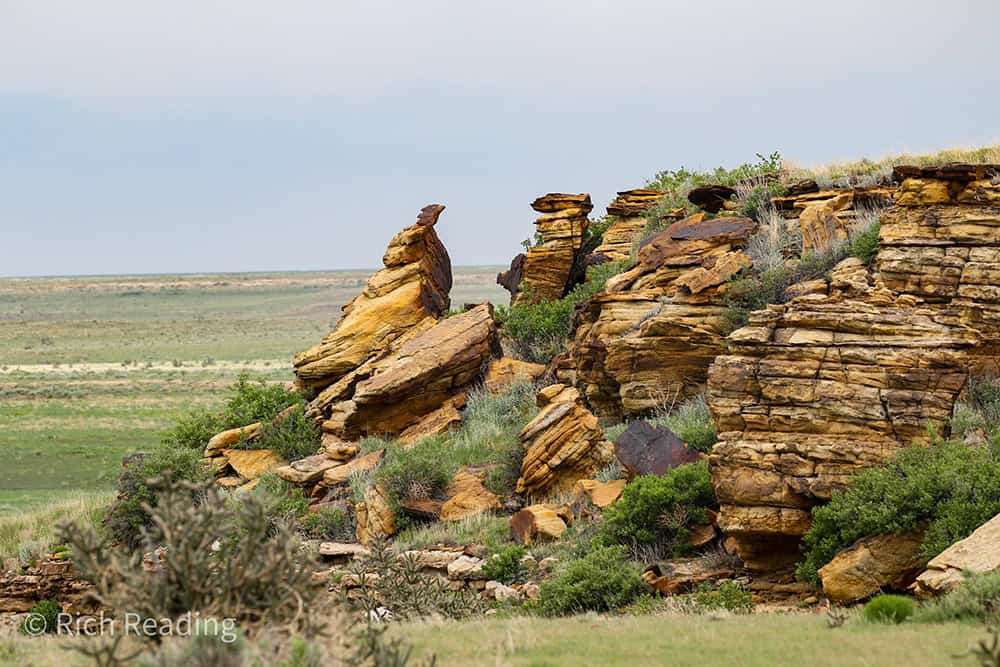
Heartland Ranch Nature Preserve. Photo by Rich Reading.
Why This Matters (At Every Scale)
Protecting large, connected landscapes is critical for biodiversity. Wide-ranging species like bison, grassland birds, and predators need space—not just to survive, but to thrive. Large preserves also help ecosystems function naturally, allowing fire, grazing, and water cycles to shape the land as they have for thousands of years.
At the same time, this kind of large-scale conservation works hand in hand with what homeowners, schools, and communities are doing on smaller parcels of land. A native plant garden, schoolyard habitat, or neighborhood green space may seem small on its own, but together, these spaces create corridors and stepping stones that connect to protected lands like SPLT’s preserves.
That’s the power of the Biodiversity Map: it shows how every scale of action matters—from a few square feet of native plants to tens of thousands of acres of restored prairie. Seeing SPLT’s acres alongside homes, schools, and community projects reinforces an important idea: biodiversity recovery is not one group’s job. It’s a shared effort, strengthened when organizations, land trusts, and individuals all show up.
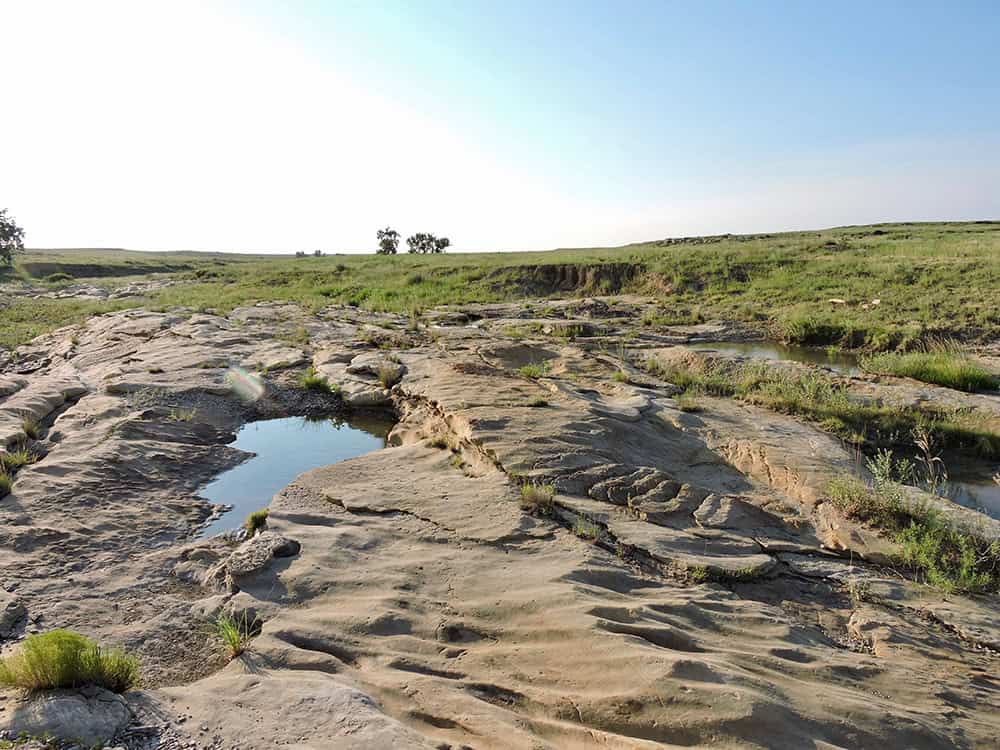
Heartland Ranch Nature Preserve. Photo by Rich Reading.
An Invitation to Other Conservation Organizations
Southern Plains Land Trust’s participation is an open invitation to other land trusts, conservation groups, and land-holding organizations. If you protect land, manage habitat, or hold conservation easements, your acres belong on the Biodiversity Map too.
Adding conserved land helps tell a fuller story of what’s already being protected, and helps inspire others to take action where they live.
Contact us to help bring your impact into the movement.
Learn More & Get Involved
- To learn more about Southern Plains Land Trust and their work restoring the shortgrass prairie, visit southernplains.org.
- Check out the Biodiversity Map. If your organization protects land and would like to add your acres to the Map, contact us - mapsupport@homegrownnationalpark.org
- Interested in creating a land trust or learning how land trusts work? The National Association of Land Trusts (NALT) is a great place to start.
Together—from backyard gardens to vast prairie preserves—we can rebuild the ecosystems that sustain us all.

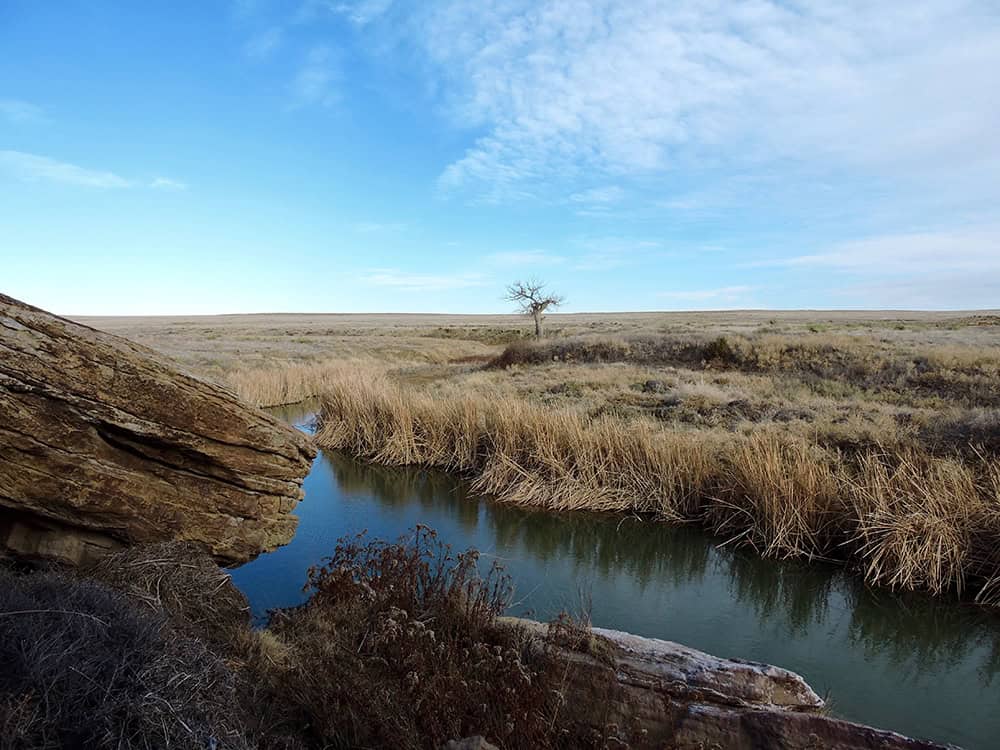
Heartland Ranch Nature Preserve. Photo by Rich Reading.