

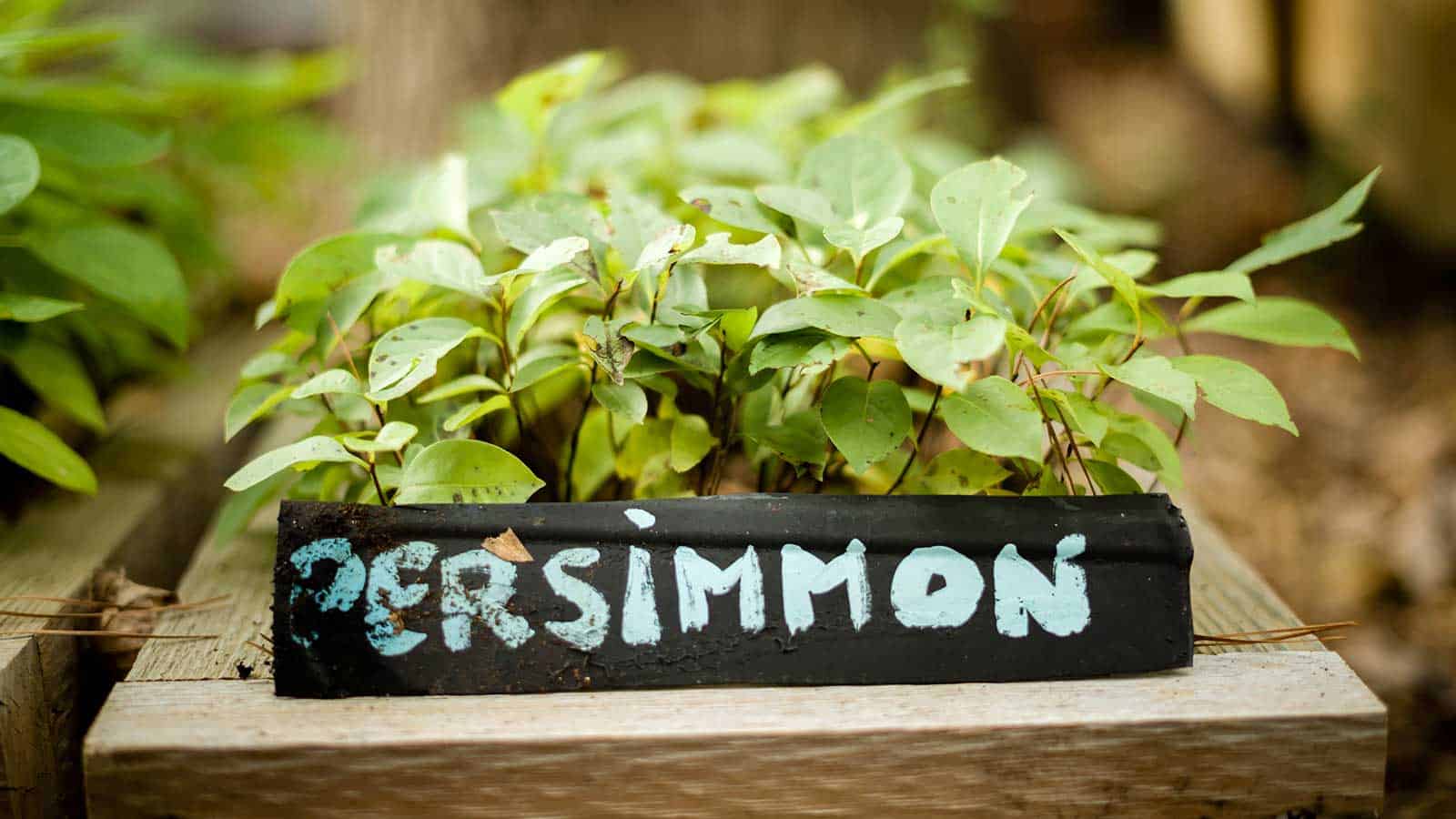
All photos from Leaf & Limb | Raleigh, North Carolina
If your tree or shrub was planted, it won't need much from you. In the first year, steady, deep watering helps roots spread into the surrounding soil. After that, your tree needs a little less help each year.
Haven't planted yet? Start with our planting guide.
Water deeply for the first two to three years
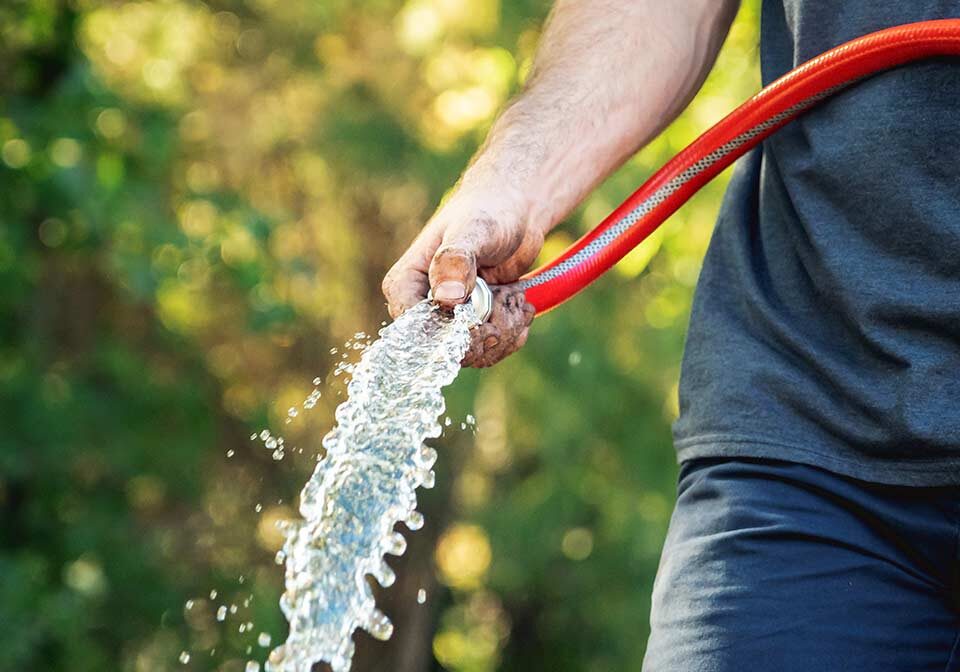
Watering well in the early years is one of the most beneficial things you can do for a new tree. Aim for a deep soak, not a light sprinkle. Use about 10 gallons of water for every inch of trunk width each time you water. A tree with a 2-inch trunk needs about 20 gallons.
Check before you water. Dig down 4 to 6 inches near the roots and squeeze a handful of soil. If it crumbles or feels dry, it's time to water. If it feels like a wrung-out sponge, it's just right. Soggy soil can drown roots, so skip watering if the ground is already wet.
YEAR 1
Water often and deeply
Water once or twice a week from spring through early fall, depending on rain and heat. Pay extra attention during dry spells.
YEAR 2
Water less often
Water deeply every 10 to 14 days. Spacing out watering encourages roots to grow deeper, so your tree relies on watering less over time.
YEAR 3
Water only in dry spells
By now your tree should be well established. Water only during long dry periods, usually more than two to three weeks without rain in hot weather.
Planted a small sapling?
Young saplings need much less water. They usually only need a drink during long dry spells. Bare-root saplings planted while dormant may not need watering at all.
Keep wood chips in place and skip the fertilizer
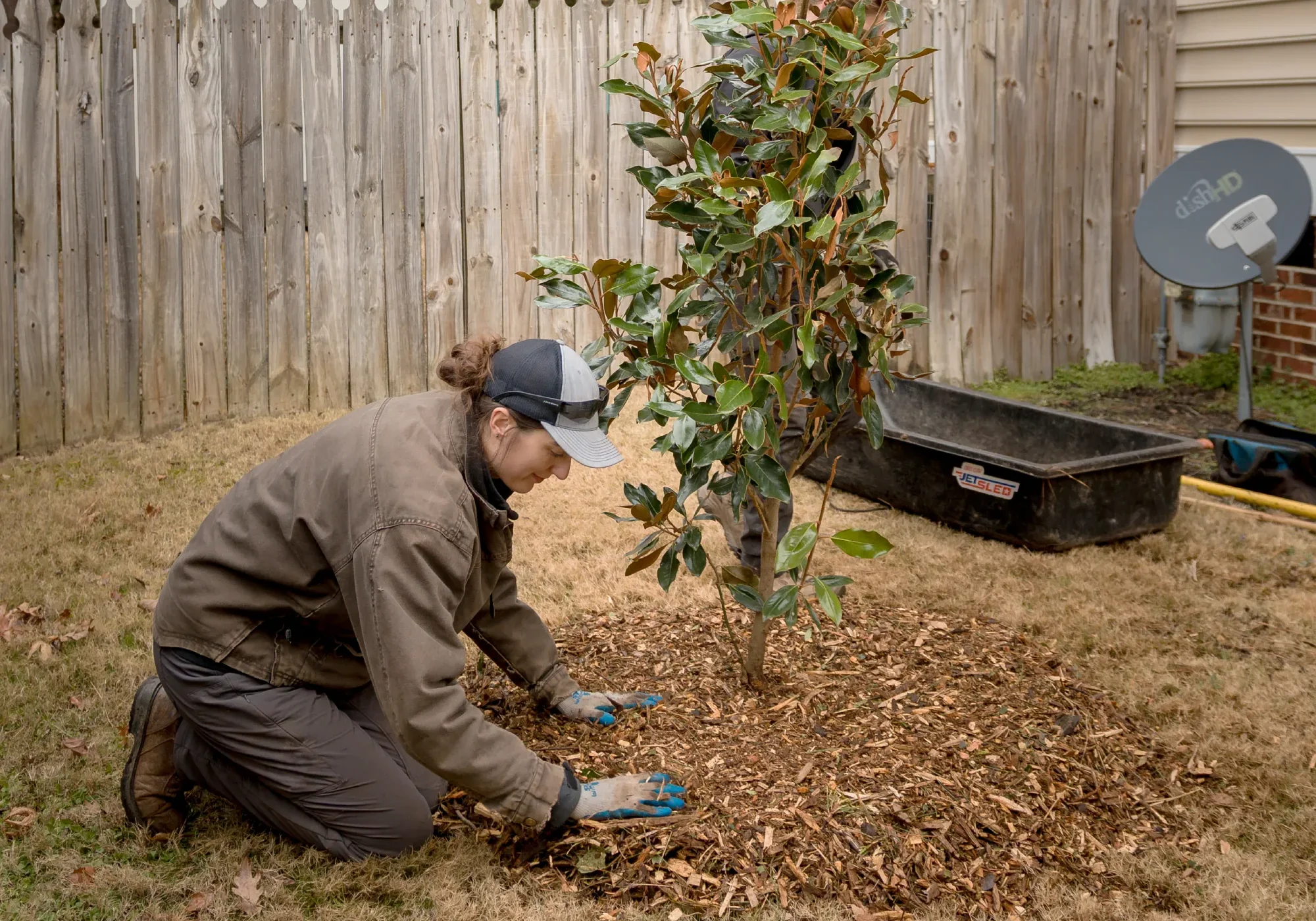
A layer of arborist wood chips holds moisture in the soil, so you water less often. It also protects roots from heat and cold and keeps mowers away from the trunk.
- Top them up each year. Wood chips break down over time. Add more to keep the layer 3 to 6 inches deep.
- Keep a gap around the trunk. Leave at least 3 inches of space between the wood chips and the bark.
- Loosen packed areas. Break up any compacted spots with a garden fork so water can soak in.
- Leave the leaves. Fallen leaves on the chip bed break down and feed the soil.
Your tree doesn't need fertilizer. It can harm the soil and doesn't help young roots grow. If you want to feed the soil, use wood chips or compost instead.
Prune only what you need
In the first year, let your tree recover from transplanting. Remove only dead or broken branches and leave the rest.
After the tree has become established, but it is still young, structural pruning will help it grow a strong central trunk, evenly spaced branches, and a balanced canopy. If you're not sure where to cut, a certified arborist can help.
Protect the trunk
Young bark is thin, and it can be damaged quickly. A ring of wood chips keeps mowers and string trimmers at a distance. Where deer are a problem, add a trunk guard or a wire cage around the tree.
Remove stakes after a year or two
If you staked your tree at planting, take the stake and ties off after the first or second year. As the trunk grows, a tie left in place can cut into the bark and kill the tree above that point.
Common questions
Make your trees count
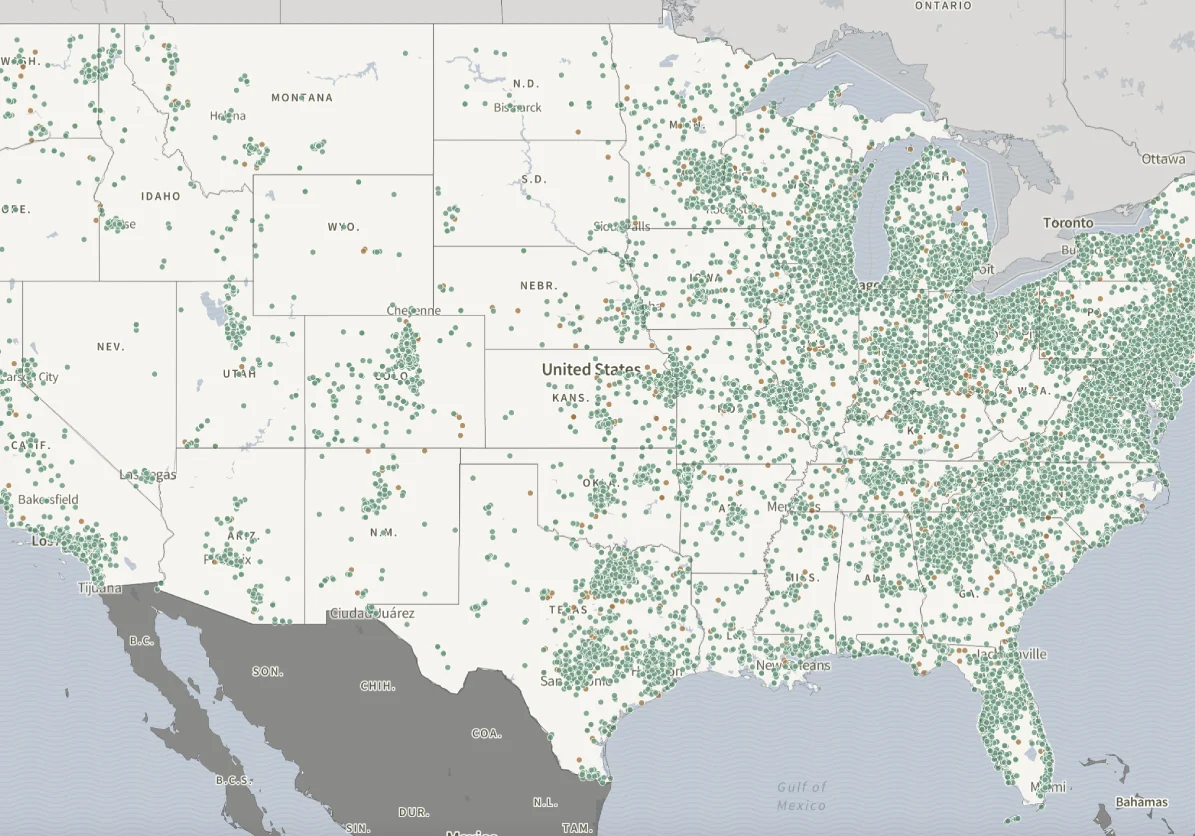
Every native tree and shrub you plant adds food and shelter for insects, birds, and other wildlife where you live. Add your space to the HNP Biodiversity Map and see how your yard connects with others across the U.S. and Canada.

Photos by Leaf & Limb, written in collaboration with HNP and Leaf & Limb
Leaf & Limb is a local, family-owned B Corp that helps heal Earth and share its wonder by planting trees and flowers, caring for them, and helping others do the same.
Project Pando
Project Pando is our non-profit where we connect people with trees to help heal the planet. We do this by operating a native seed hub that works with our community to collect seeds from native trees and shrubs. We then grow these seeds into saplings to benefit native restoration projects in our local ecosystem. Learn more about Project Pando.
Related
Choose plants that make a difference
Find native plants near you
Order native plant kits
Get started planting native