


By Sarah Sorci
Est. Read Time: 7 minutes
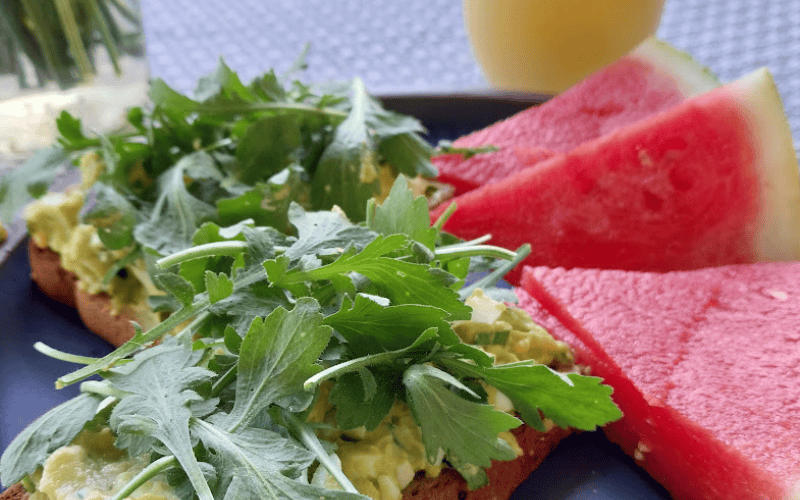
Cover photo: Pepperweed leaves top egg salad and toast.
I often sense an air of martyrdom around planting native species. We selflessly devote a portion of our gardens to supporting wildlife–space that could have grown tasty veggies or eye-catching ornamentals.
As we get to know native plants, we learn that the distinction between native vs. ornamental vs. edible is a false one. Native plants can be all three!* Native American traditions, Western herbalism principles, and foraging teachers guide us to delicious uses of edible native garden plants.
*Note: Not all native garden plants are edible. Consult a trusted source before nibbling.
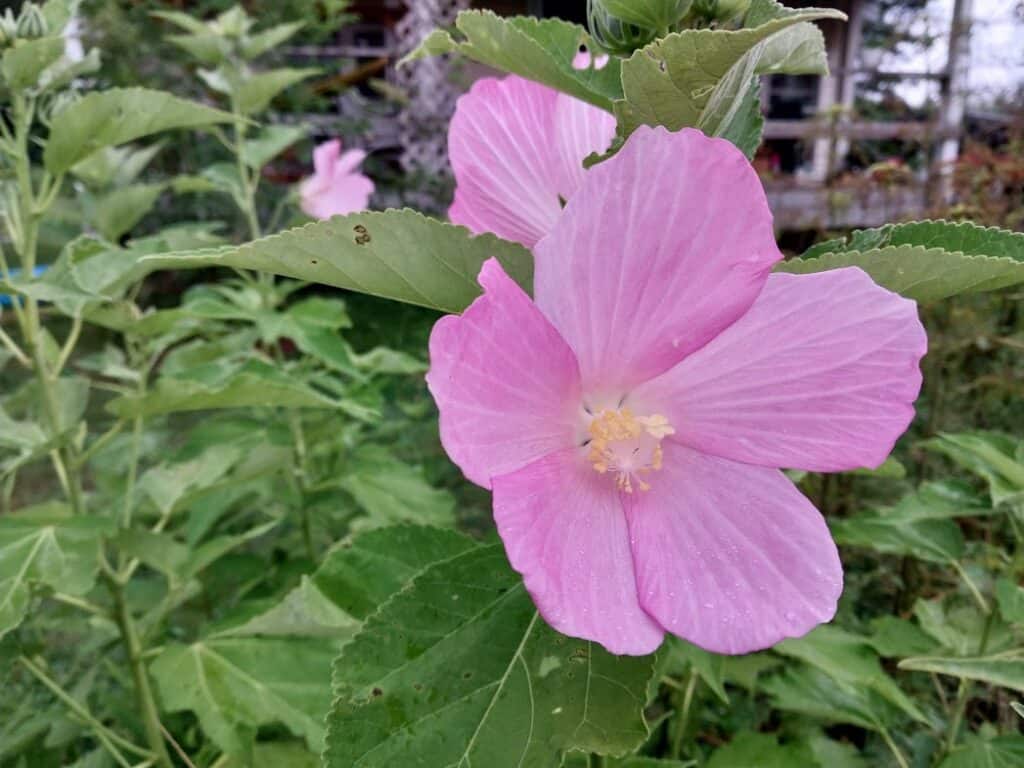
Hibiscus moscheutos in full bloom
"Shouldn't we leave native plants for wildlife?"
Native plants have vital relationships with native insects, birds, and other wildlife. Shouldn’t we leave native plants for them and eat non-native veggies and herbs?
The Western conservation movement presumes that degrading nature is what humans do–and to save nature, we must leave it alone. However, traditional cultures around the world demonstrate that the more we depend on the plants around us, the more we notice changes in their populations, and the more invested we are in their well-being.
The magic of plants is that they don’t provide a finite amount of food. Using regenerative harvesting methods, we don’t just leave enough for local wildlife; we can boost the abundance by extending bloom times, increasing flower and seed production, refreshing crowded plantings, and propagating new plants:
- Dividing roots: Digging and dividing a perennial clump gives crowded plants more space. It also provides an opportunity to nourish plants with fresh compost when replanting. This is a great time to take some edible roots for cooking, like nodding onion or prairie onion bulbs (Allium cernuum; A. stellatum).
- Pinching tips: For many species, pinching off growing tips in the spring creates bushier plants with more leaves and flowers–providing more food for you and local wildlife. Mint family (Lamiaceae) herbs like bee balm/wild bergamot (Monarda spp.) respond well to this technique. Enjoy nibbling the pinched sprigs!
- For some species, harvesting flowering tops stimulates more flower production, increases the total number of seasonal blooms, and extends the flowering season for visiting insects and hummingbirds. My anise hyssop (Agastache foeniculum) snipping results in a months-long bloom time–plus a summer full of delicious smoothies, popsicles, and iced teas. I let the last round of blooms go to seed to feed songbirds.
Below, I share tasty ways to use several native garden herbs.
Rose Mallow & Swamp Rose Mallow
Rose mallows are tall and stately, with lush foliage that charms from the back of a bed. Like other Hibiscus species, their blooms will turn heads.
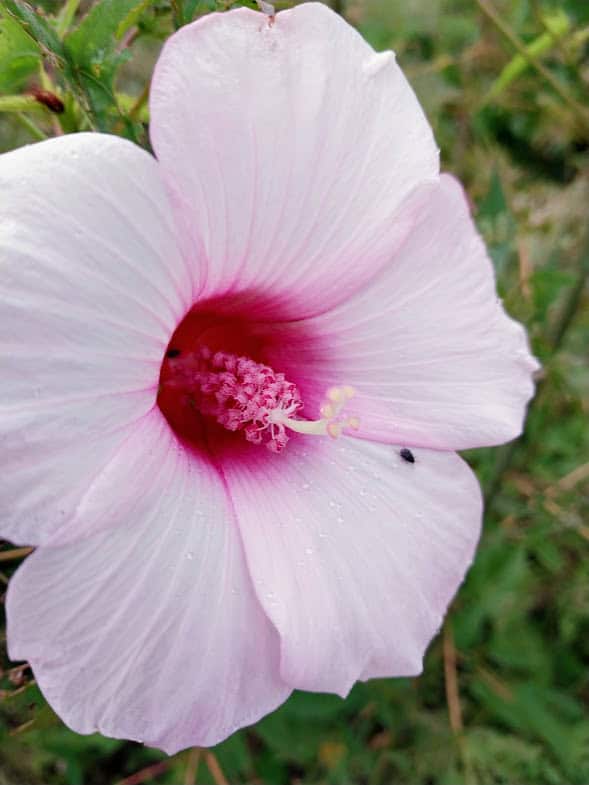
Hibiscus laevis in flower
Rose Mallow in the Kitchen
Like okra (Abelmoschus esculentus), marsh mallow (Althaea officinalis), and other mallow family cousins (Malvaceae), rose mallow provides thickening mucilage in cooking. It adds pleasant body to tea blends, balancing the astringency of many herbs.
H. laevis leaves are more tender than H. moscheutos, and they taste a bit like watermelon. Enjoy them raw in leafy salads, fruit salads, and hydrating smoothies.
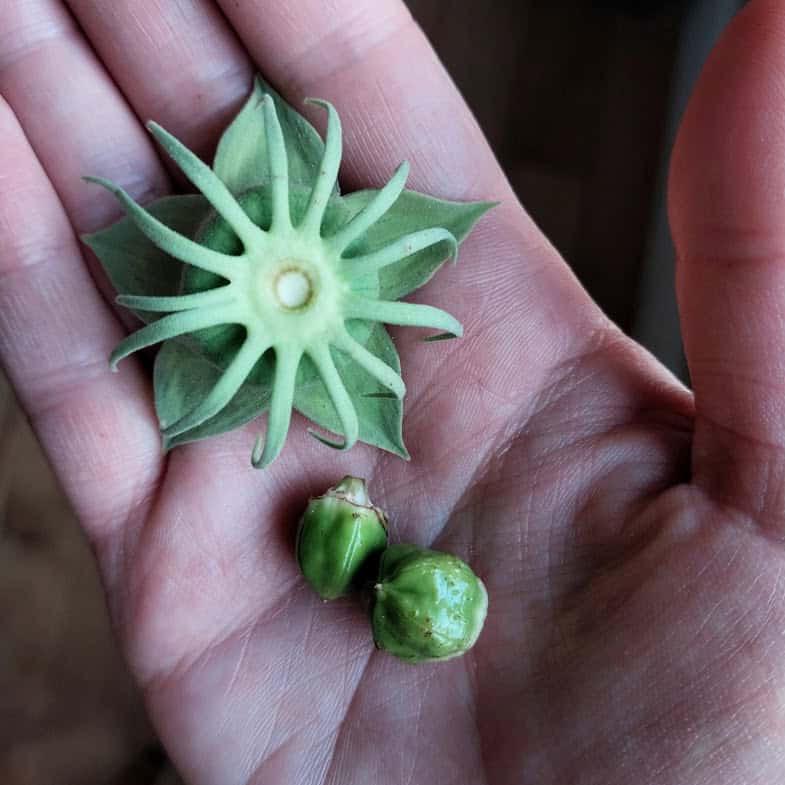
The unripe seed pods of rose mallows can be used like okra (at bottom, pictured next to the calyx)
The flower petals are mild-flavored and subtly mucilaginous. I tuck them into sandwiches and burritos. Though tender, the petals are sturdy enough to use as edible “utensils”, like flatbreads from South Asia (e.g. chapati, naan, and roti) or Ethiopian/Eritrean injera. I love plating curries and other stewed dishes with a whole Hibiscus flower: pluck a petal and scoop up a bite.
Hibiscus seed pods are a small version of okra pods. I harvest right after the petals drop, peeling the tender pod off of the green calyx. I chop and toss them into gumbo and other stews. Most often, I pop them straight in my mouth—a lovely hydration supporter on hot gardening days.
Note: These uses are intended for H. laevis and H. moscheutos. Do your research before consuming other species.
Rose Mallow in the Garden
Grow rose mallows in a moist patch with full- to part-sun. They prefer slightly acidic soil.
According to the National Wildlife Federation, rose mallows are host plants to over 25 species of butterflies and moths. My personal favorite is delightful bird dropping moth (Tarache delecta); I recommend taking a peek!
H. laevis is the only native plant I grow that suffers significant insect damage. I remove Japanese beetles, slugs, and snails, but I feel compelled to leave native hibiscus sawfly larvae alone when they find their host. I now consider H. laevis a “trap crop” that spares the H. moscheutos growing nearby.
Pepperweed
(Lepidium virginicum)
Pepperweed is also known as poor man’s pepper. It’s a brassica (Brassicaceae) along with arugula, mustard, broccoli, and other beloved veggies. Like its relatives, pepperweed forms long, delicate flower racemes. It may look weedy when randomly dispersed in a garden—but what plant doesn’t? When given the dignity of a designated garden plot, their wispiness is graceful, eye-catching, and unique. The seeds form in circle-shaped “husks” that whimsically spiral down the stem.
Note: There are non-native/invasive pepperweed species; be sure to grow a native one.
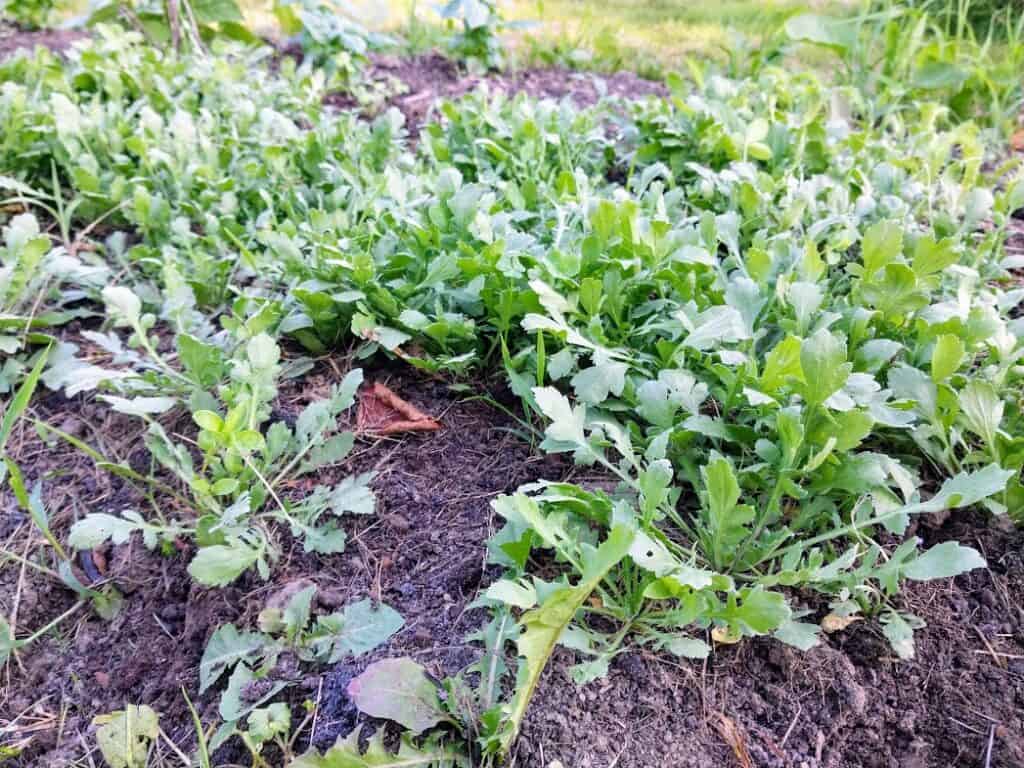
A spring bed of pepperweed greens
Pepperweed in the Kitchen
In springtime, pepperweed offers tender, mildly spicy leaves that I use like arugula. I toss them in green salads, and their crunchy bite balances the richness of pizza, egg salad, and omelets.
The seeds also offer a pleasant kick. In India, a close relative (Lepidium sativum) is used as a spice called asaliya. Grind pepperweed seeds or toss them into dishes whole. Seed capsules can be enjoyed while they’re still green, or harvest dried seeds when the stems and “husks” turn brown. Mature seeds work well for growing microgreens or sprouts.
You’ll find a recipe for Everything Bagel Seasoning with Pepperweed Seeds below.
Pepperweed in the Garden
Grow pepperweed in full- to part-sun. It tolerates a wide range of soil conditions and grows in acidic to mildly alkaline areas (source). Pepperweed returns to my garden each spring by self-sowing, and I love that I don’t need to replant! If you’d like to avoid self-sowing, remove flower heads before the seeds mature.
Pepperweed has been dubbed a “super host” for native butterflies (source). If you grow brassicas in your vegetable garden, pepperweed may also ease pest pressure. Diamondback moths (aka cabbage moths) are an invasive species in North America, and their larvae cause significant damage to cabbage and other brassica crops. In one study, diamondback moths preferred laying their eggs on pepperweed over cultivated cabbage (source). For the record, I haven’t noticed significant pest damage on my pepperweed plants.
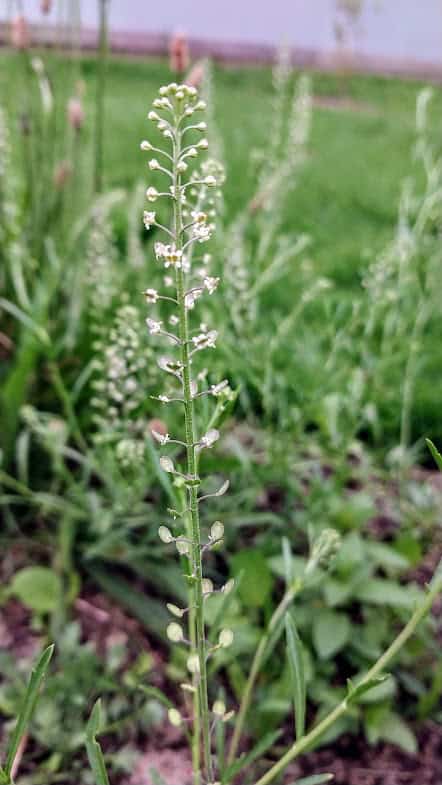
Pepperweed's delicate flower racemes give way to attractive seed heads
Bee balm & Wild Bergamot
(Monarda spp.)
I thank our lucky stars that the Monarda genus is native, gorgeous, and delicious. Most species offer a spicy, pungent flavor similar to oregano. Scarlet bee balm (M. didyma) has a uniquely sweet, floral aroma—one of my favorite scents.
Monarda’s edible flowers are showier than its herbal mint family cousins–basil, thyme, oregano, rosemary, and many more–and the aerial parts dehydrate beautifully. I’m surprised Monarda hasn’t yet made it to the grocery store spice aisle.
Any Monarda species can be used in cooking. Spotted bee balm (M. punctata) and lemon bee balm (Monarda citriodora) are two stunners with the oregano-like kick. I’ll focus on the easiest species to find at a nursery: scarlet bee balm (M. didyma) and wild bergamot (M. fistulosa).
Monarda in the Kitchen
Monarda’s tender leaves can be enjoyed fresh or dried. Remove leaves from the tough central stalk before cooking. I add any species’ leaves to roasted root vegetables or chicken in place of (or in addition to) rosemary and sage.
My husband and I save veggie scraps and bones in freezer bags to make our own broth. We add herb stalks to the bag after stripping off tender leaves for cooking, and Monarda stalks are a great addition.
Sweet M. didyma leaves and flowers are well-suited to desserts and dessert teas. Infused in white wine or rice vinegar, the leaves and flowers make a bright magenta herbal vinegar.
Any species’ flowers can be sprinkled like confetti on plated dishes. Remove flowers from the tough central “ball” before eating.
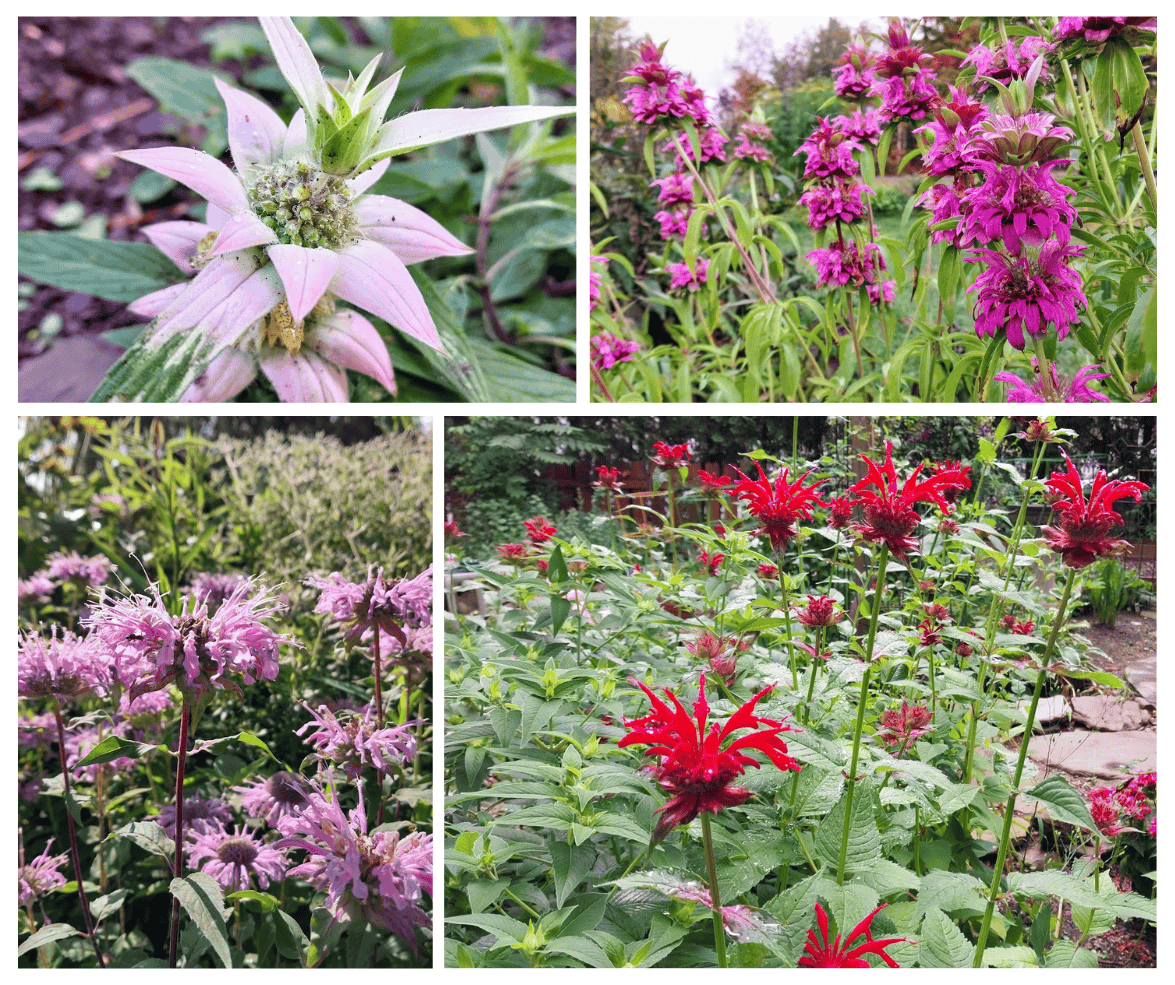
Favorite Monarda species in Sarah's garden. Clockwise from top left: Monarda punctata; Monarda citriodora; Monarda didyma; and Monarda fistulosa.
Monarda in the Garden
In the wild, I find M. didyma growing in or near creek beds in part-shade. I give it ample moisture in the garden–especially if it’s exposed to more sun. M. fistulosa prefers full-sun to part-sun and drier soils than M. didyma.
Monardas are a valuable food source for bumblebees, specialist bees, hummingbirds, and wasps that predate garden pests. They’re also a nectar source for monarchs and other butterflies (source). Like other mint family plants, Monarda seeds are actually small nutlets. Finches, juncos, sparrows, redpolls, and other birds feed on them (source). However, hungry mammals are deterred by Monarda’s aromatics.
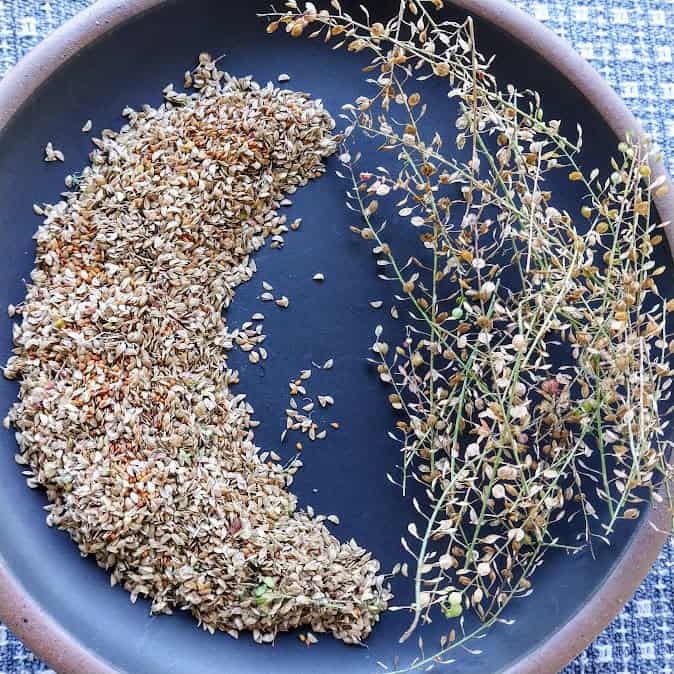
Dried pepperweed seeds and chaff
Recipe: Everything Bagel Seasoning with Pepperweed Seed
Featured in Native Culinary Herbs: Online Gardening Course
My friend Janine gifted us Everything Bagel Seasoning years ago, and we’ve been hooked ever since. It’s not just for bagels! We sprinkle it on eggs, Asian-style stir-fries and soups, hummus, toast, popcorn, and more.
Pepperweed seeds are a natural addition to this seasoning. You can purchase the other ingredients online from a bulk herb company, or from a local food co-op. Feel free to dehydrate your own native or “regular” garlic and onion if desired. Wild garlic (Allium canadense) and nodding or prairie onion bulbs (Allium cernuum; A. stellatum) are native garden plants to consider.
I love flaked salt in this recipe, but it’s relatively pricey at my grocery store. Coarse salt is a fine substitute.
Ingredients:
- 2 Tbsp (30 mL) mature, dried pepperweed seeds (husk removed)
- 3 Tbsp (44 mL) poppy seeds
- 3 Tbsp (44 mL) sesame seeds (a mix of white + black seeds looks nice; all white works fine)
- 3 Tbsp (44 mL) dried minced garlic or wild garlic
- 3 Tbsp (44 mL) dried minced onion, nodding onion, or prairie onion bulb
- 4 tsp (59 mL) flaked or coarse salt
Stir ingredients together in a bowl. Store in a capped glass jar in a dark place.
I used a recipe by Maria Lichty as a starting point for this recipe.
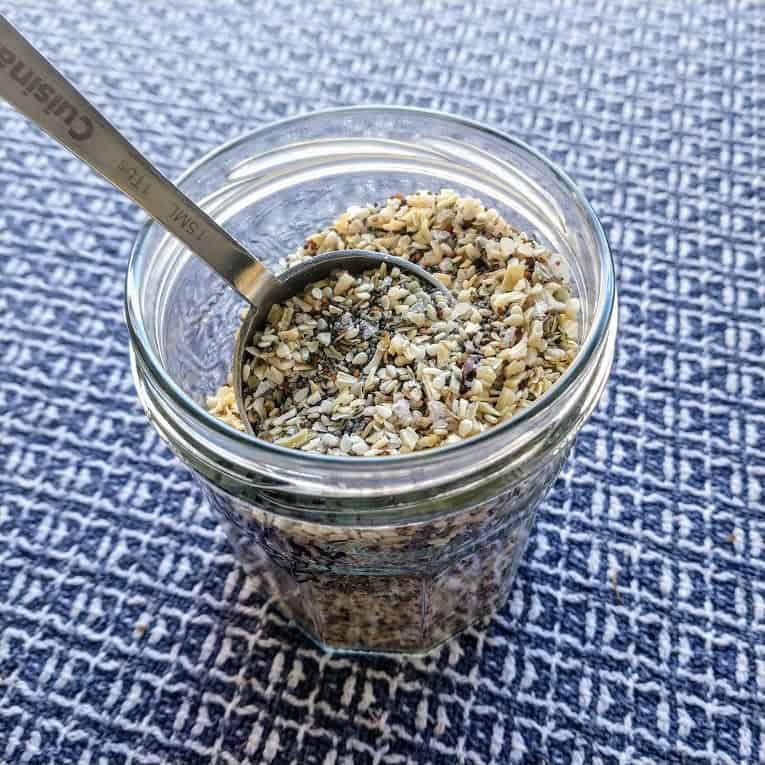
Everything Bagel Seasoning with Pepperweed Seeds
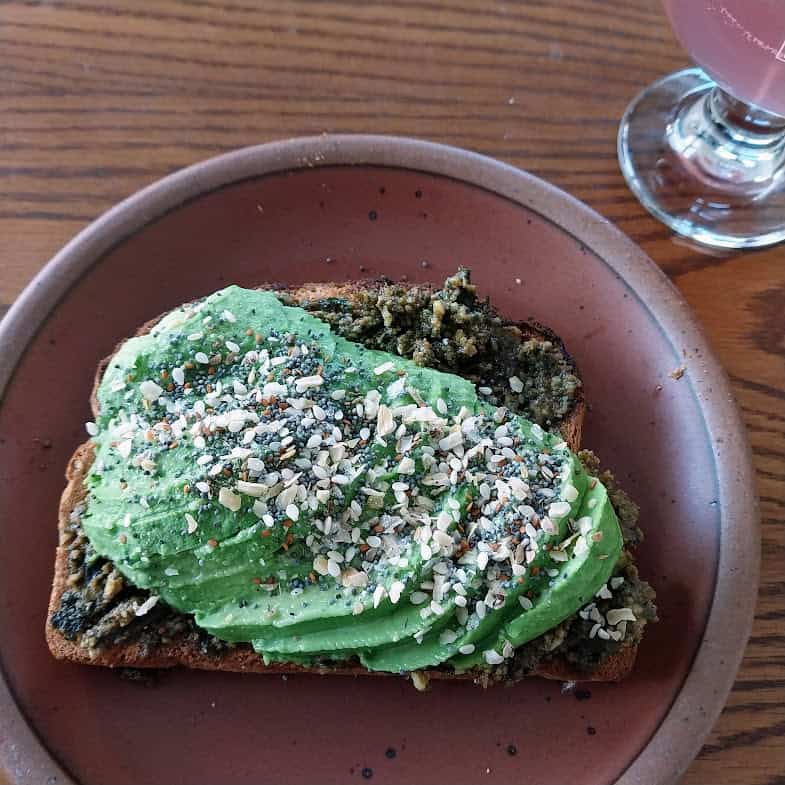
Everything Bagel Seasoning with Pepperweed Seeds on toast with pesto and avocado.
Want to learn more about native culinary herbs?
HNP readers take $20 off Native Culinary Herbs: Online Gardening Course with code HNP20. With this code, 20% of your registration fee will be donated to Homegrown National Park.
Learn more at sweetflagherbs.com.
Sarah Sorci is an herbal educator, writer, and therapeutic gardening facilitator based in Western New York. Through her work with Sweet Flag Herbs, she creates resources that help people connect with plants, support local ecosystems, and explore food, medicine, and ancestry through the natural world.
Excellent article, Sarah. I share your interest in edible native plants. Extolling the comestible virtues of native plants is something I do frequently. I have a PowerPoint presentation entitled “Nibbling on Native Plants in Your Back Yard and Beyond” that I am invited to give to garden clubs, land trusts and many other audiences. (Here’s a link to a recording of a presentation I made last fall, hosted by the Association to Preserve Cape Cod – https://apcc.org/news-events/events/nibbling-on-native-plants-in-your-back-yard-and-beyond-with-russ-cohen/). The point of this presentation is the fact that many of our native plant species are edible by people too provides an additional powerful incentive for people to “go native” in their landscaping that might otherwise be insufficiently induced to do so for the ecological rationale alone. I always accompany my talks with samples of goodies made with edible native ingredients for folks to sip and nibble on. One of the recipes I make that is greatly appreciated by my attendees are my Black Walnut Honey Squares. That recipe, along with several others, is included in an article I wrote on Black Walnut for the Wild Ones Journal that came out in the fall of 2024. Here’s a link to it: https://www.dropbox.com/scl/fi/evzr4q11w2ub8uxy7oexd/BlackWalnut_RussCohen_WildOnesJournal_Fall_2024.pdf?rlkey=7ycclkz0syvyjiquruf5bxwfx&dl=0
I have also written (and co-written) several articles on multiple edible native species suitable for adding to home landscapes. See, e.g., “Edible and Landscape-worthy Native Plants of New England, by Ellen Sousa and Russ Cohen”, https://www.ecolandscaping.org/09/developing-healthy-landscapes/ecological-landscaping-101/edible-and-landscape-worthy-native-plants-of-new-england/ , and “More Edible and Landscape-Worthy Native Plants of New England”, by Georgia Hann and Russ Cohen, https://www.ecolandscaping.org/06/designing-ecological-landscapes/native-plants/more-edible-and-landscape-worthy-native-plants-of-new-england/
I thoroughly enjoyed this contribution, Sarah. Thank you! I hope you consider writing down your speech, Finding Hope and Embodiment in the Garden, that you shared today at the Unitarian Universalist Church of Hamburg. I joined via Zoom to hear you but it was almost impossible to hear anything.
Thanks for your note, Caroline! I would be happy to email you a copy of the talk. Please feel free to share your email address using the contact form on my website (sweetflagherbs.com/contact) and I’ll send it along.