

Jump to: How to Show Your Certified Habitat on the Map
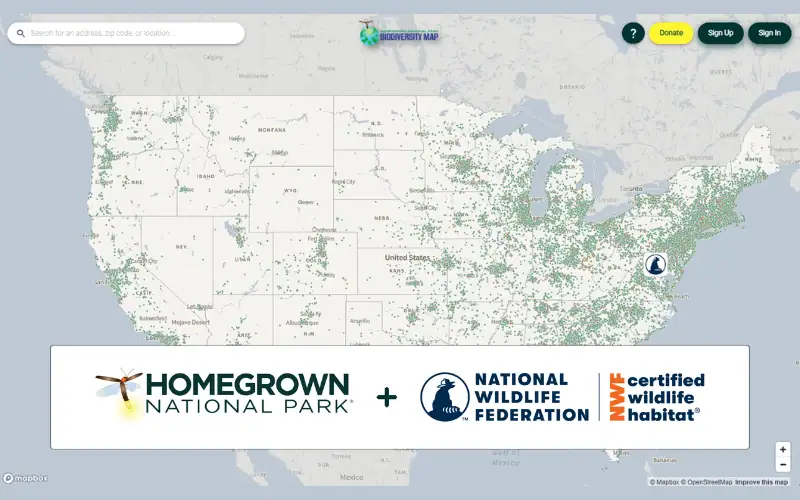
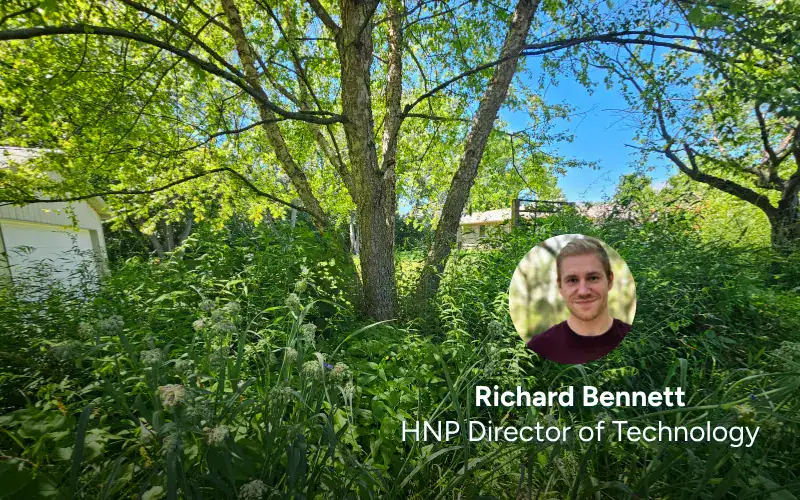
Richard Bennett, HNP’s Director of Technology, built much of the technical functionality behind the Homegrown National Park Biodiversity Map. But it wasn’t just him. Volunteers, staff members, partners, and the wider community all shaped it, and that mix of people is how we got to where we are today. Beyond the Map, Richard also knows what it means to recognize and rebuild a functioning habitat.
In 2021, he certified his own garden with the National Wildlife Federation. It was small, about 6 feet by 12 feet, and he had been working on it for only two or three years. He put up the sign, and neighbors started stopping to ask about it.
That was the point. Richard says his main motivation was "to spark curiosity and show that our garden was more than just plants—it was functional."
Then Richard moved. He left that first garden behind for the next owner, a small piece of habitat already in place. At his new home, he started again, and the space has grown to nearly a quarter acre, more than 100 times the size of his first garden.
A small space, a sign, and a few curious neighbors. That is how our movement grows.
From wounds to wonder
In 1949, Aldo Leopold put words to a feeling many of us know well. In A Sand County Almanac, he described what it means to see the land the way an ecologist does:
"One of the penalties of an ecological education is that one lives alone in a world of wounds. Much of the damage inflicted on land is quite invisible to laymen. An ecologist must either harden his shell and make believe that the consequences of science are none of his business, or he must be the doctor who sees the marks of death in a community that believes itself well and does not want to be told otherwise."
Aldo Leopold, A Sand County Almanac (1949)
Leopold was describing what many people in this movement feel today: ecological grief. It is the weight of recognizing degraded soil, lost habitat, and disrupted ecosystems in landscapes most people see as perfectly ordinary, or even thriving. A tidy lawn looks healthy. A mowed field looks fine. But if you know what should be there, you see what's missing.
Leopold said the choice is to look away or to be the doctor. We choose to be the doctor. But no doctor should have to work alone.
That is what the HNP Biodiversity Map and the Certified Wildlife Habitat designation are for. They show that what you plant has an impact, and that you are not the only one doing it. And when habitat returns, wonder follows: the butterflies, the birds, and the neighbors who stop to ask.
Why we're partnering with NWF
Homegrown National Park and the National Wildlife Federation want the same thing. We both want to restore and protect biodiversity, and we both know it happens one property at a time.
NWF has helped people create habitat for more than 50 years. Doug Tallamy has advised its Certified Wildlife Habitat program for years, helping shape the science behind it. Today, NWF's state affiliates help neighbors create habitat in communities across the country. Doug then co-founded Homegrown National Park to reach even more people with the same message.
Our partnership does two things:
- NWF helps people identify and follow the practices that heal those wounds.
- HNP connects people to the movement, supports their efforts, and inspires others to take part.
Together, we're going beyond conservation. We're regenerating habitat in places where it has been erased.
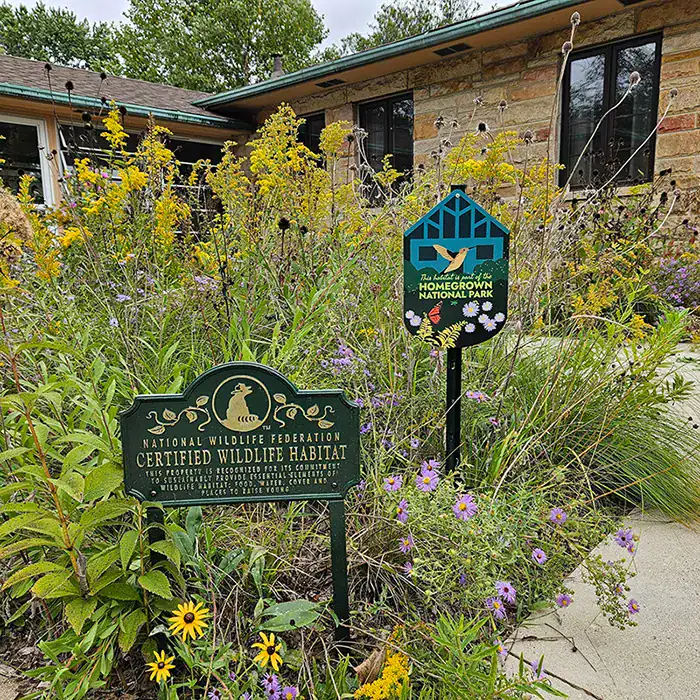
Photo from Richard Bennett | Speedway, Indiana
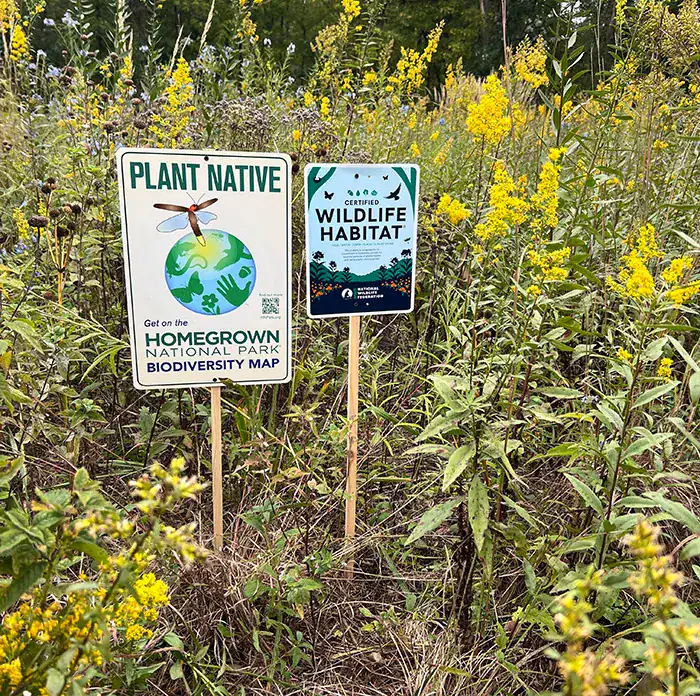
Photo from Grant Jensen | Afton, Minnesota
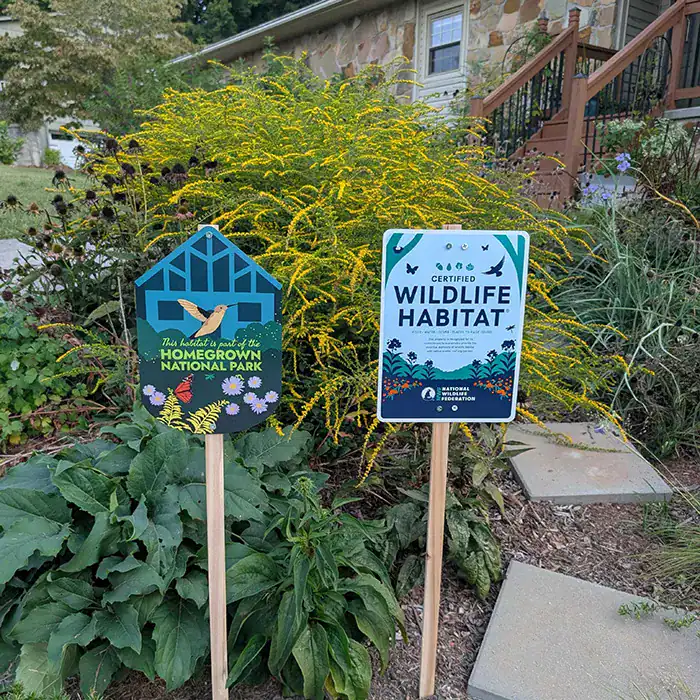
Photo from Krista De Cooke | Knoxville, Tennessee
Step one: add your space and show your intention
When you add your space to the Biodiversity Map, you are saying, "I'm part of this." It can be a balcony container garden or hundreds of restored acres. Every habitat counts.
But the Map is more than a pin. Once you sign in, you can connect to the things you care about and show your support.
Join a campaign. Two are active right now, and both are simple:
- Leave the leaves. Fallen leaves shelter overwintering insects, and many of those insects feed the birds you love. Doing less is the action.
- Soft landings. Many caterpillars drop from trees to pupate in the ground below. A soft landing gives them somewhere safe to land.
Sign in, connect to a campaign, and your support counts alongside everyone else's. You don't need a perfect yard. You need a first step.
Step two: turn intention into commitment
Intention is where it starts. Certification goes further.
When you certify your habitat with NWF, you make a commitment other people can see and benefit from. Richard says a sign is one of the easiest ways to deliver a message and spark curiosity. A neighbor walks by and asks about it. A friend wants to try. Someone on the fence decides to start.
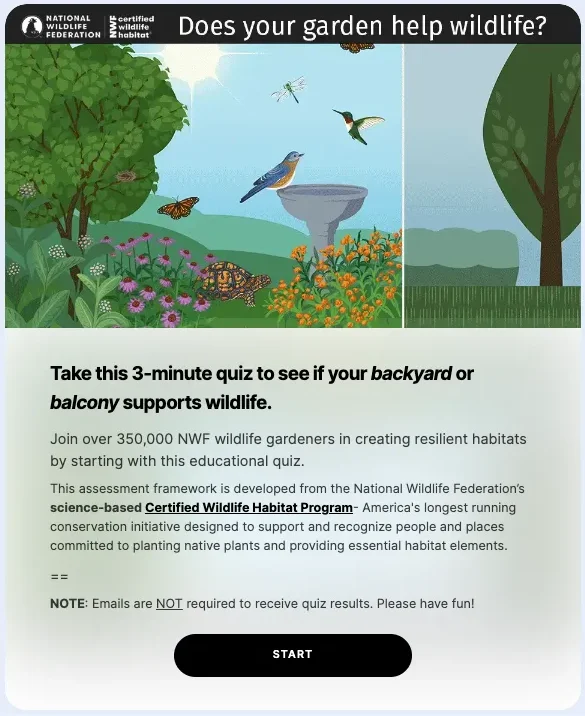
The process is quick. Start with NWF’s habitat quiz or download the checklist to see how your space measures up. You’ll need at least 3 food sources, 1 water source, 2 kinds of cover, 2 places to raise young, and 3 sustainable practices. NWF also encourages aiming for 70% native plants. If you qualify, you apply online for a $25 fee, which includes a personalized certificate, a one-year NWF membership, and a subscription to National Wildlife magazine. Richard calls the process quick and painless. Already certified? Here’s how to show it on the map.
Good news if you’ve joined Leave the Leaves on the Map: it’s already on the checklist. You can order a sign separately once you’re certified.
Many certified habitats are already on the Map, including Doug’s own property, which recently became the 350,000th Certified Wildlife Habitat.
Step three: find your people
Connect to NWF in your state. Signing in to the Map also lets you connect to NWF in your state. NWF has more than 30 state affiliates working to grow habitat in their communities. Add your yard, find the neighbors who are already doing the same thing, and bring one along.
- Alabama: 3,192 certified habitats
- Alaska: 281 certified habitats
- Arizona: 4,640 certified habitats
- Arkansas: 2,069 certified habitats
- California: 24,445 certified habitats
- Colorado: 5,407 certified habitats
- Connecticut: 4,811 certified habitats
- Delaware: 2,938 certified habitats
- Florida: 22,515 certified habitats
- Georgia: 12,714 certified habitats
- Hawaii: 202 certified habitats
- Idaho: 1,210 certified habitats
- Illinois: 11,667 certified habitats
- Indiana: 9,847 certified habitats
- Iowa: 2,119 certified habitats
- Kansas: 2,314 certified habitats
- Kentucky: 2,801 certified habitats
- Louisiana: 2,092 certified habitats
- Maine: 1,809 certified habitats
- Maryland: 9,345 certified habitats
- Massachusetts: 6,646 certified habitats
- Michigan: 10,696 certified habitats
- Minnesota: 4,964 certified habitats
- Mississippi: 1,472 certified habitats
- Missouri: 4,199 certified habitats
- Montana: 1,114 certified habitats
- Nebraska: 1,112 certified habitats
- Nevada: 934 certified habitats
- New Hampshire: 1,924 certified habitats
- New Jersey: 11,248 certified habitats
- New Mexico: 2,597 certified habitats
- New York: 12,608 certified habitats
- North Carolina: 18,110 certified habitats
- North Dakota: 221 certified habitats
- Ohio: 14,507 certified habitats
- Oklahoma: 2,352 certified habitats
- Oregon: 4,806 certified habitats
- Pennsylvania: 16,862 certified habitats
- Rhode Island: 1,144 certified habitats
- South Carolina: 12,858 certified habitats
- South Dakota: 307 certified habitats
- Tennessee: 7,049 certified habitats
- Texas: 21,462 certified habitats
- Utah: 1,046 certified habitats
- Vermont: 1,058 certified habitats
- Virginia: 16,148 certified habitats
- Washington: 13,580 certified habitats
- West Virginia: 1,335 certified habitats
- Wisconsin: 7,133 certified habitats
- Wyoming: 315 certified habitats
Your next step
Sign in to the Map and add your space. Connect to Leave the Leaves or Soft Landings, and connect to your state. Then tell one neighbor what you did.
Leopold lived alone in a world of wounds. We don't have to. Every yard on the Map is proof.
How to Show Your Certified NWF Habitat on the Map
Certified your habitat with the National Wildlife Federation? Add it to the Biodiversity Map so neighbors and fellow enthusiasts can see your commitment. It takes about a minute.
New to the map
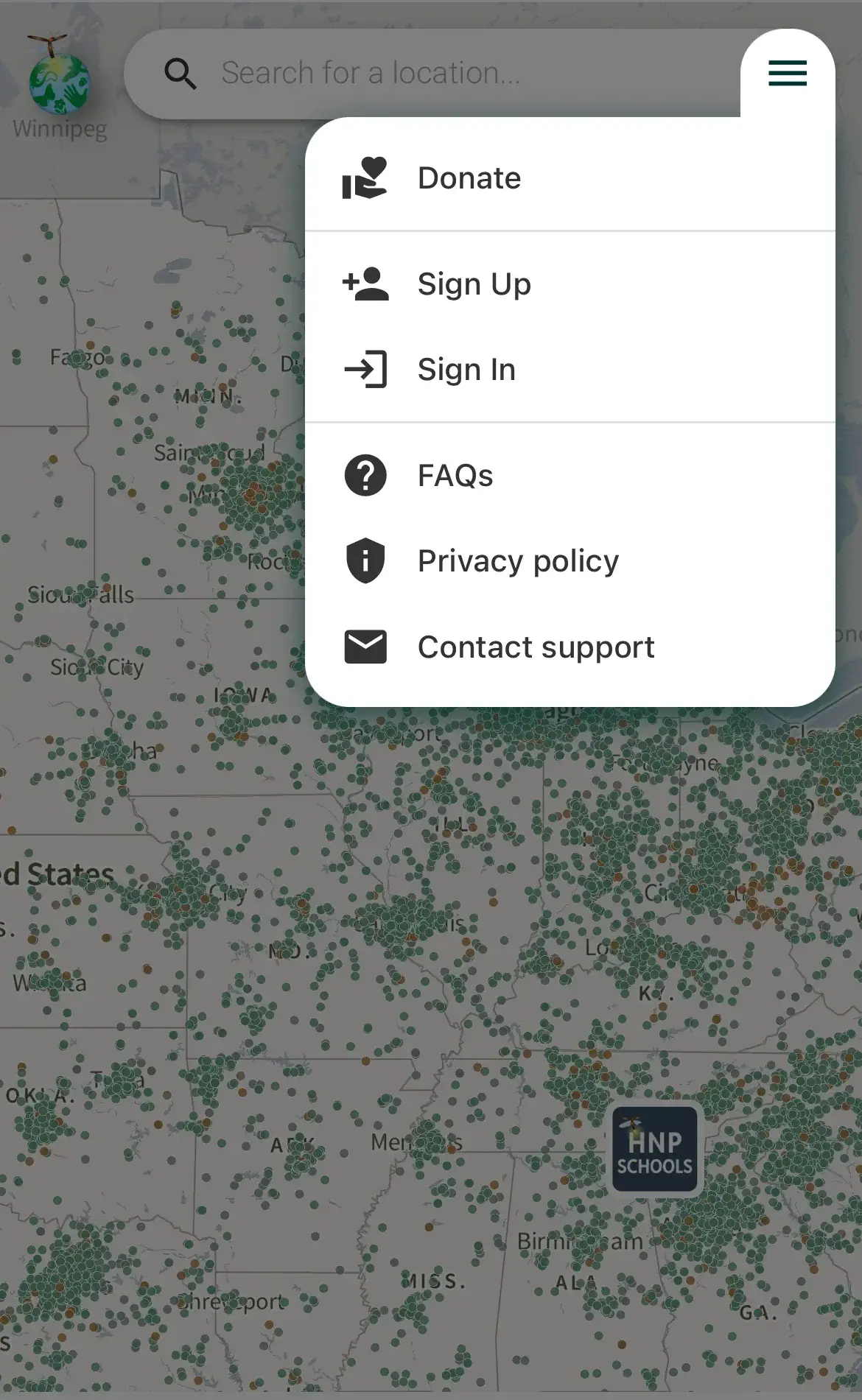
1. Go to the map and select Sign Up (top right).
2. Enter your email and name.

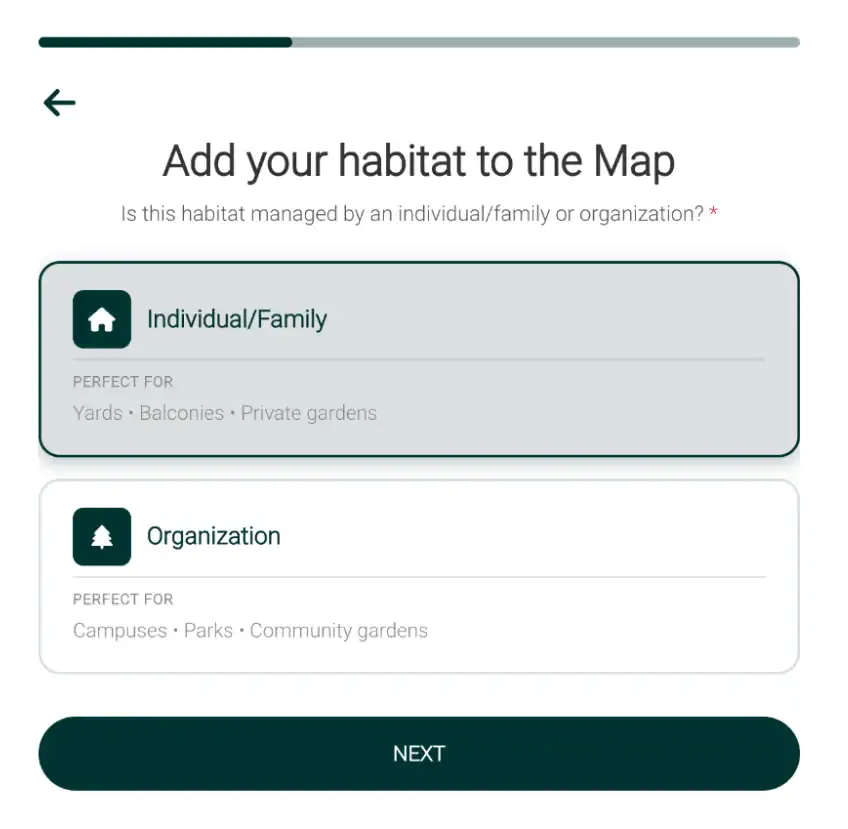
3. Choose Individual/Family or Organization.
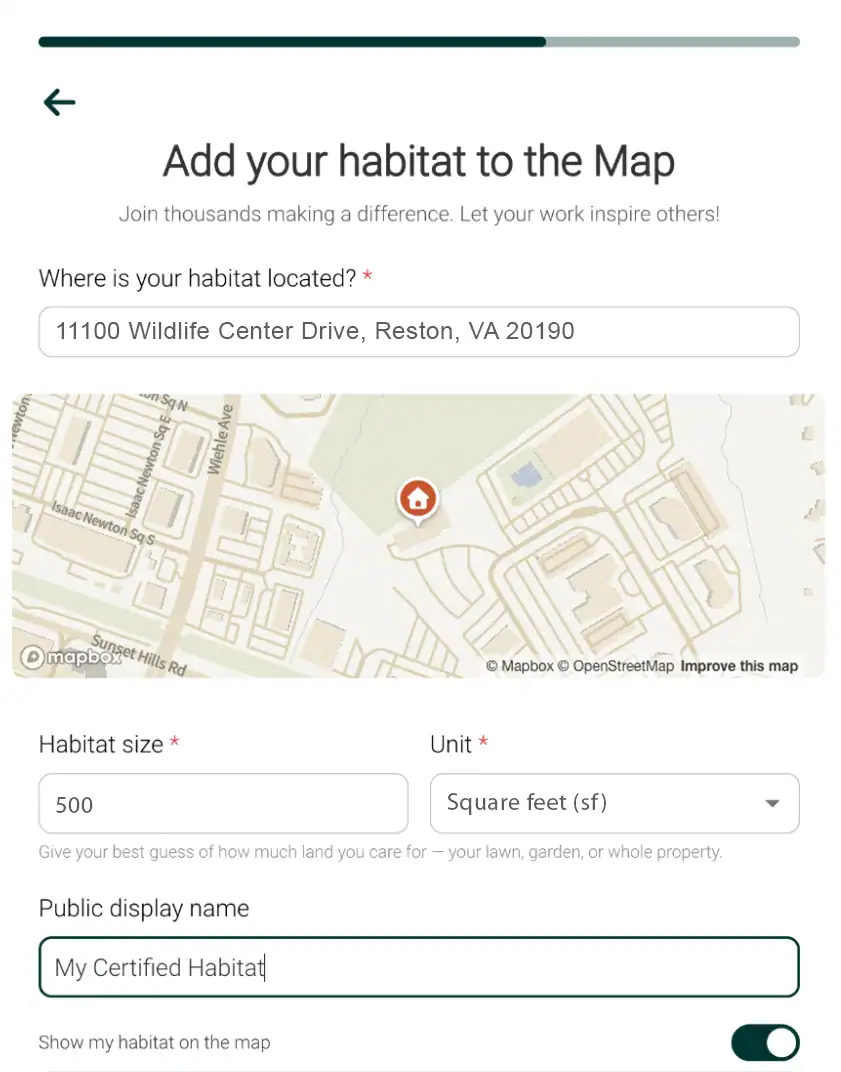
4. Add your habitat: address, size, and a public display name. A toggle lets you choose whether it shows on the map.
5. Check your email for the welcome message. If it’s missing, check spam or resend it.
6. In the email, copy the temporary password and select Complete Your Map Registration.

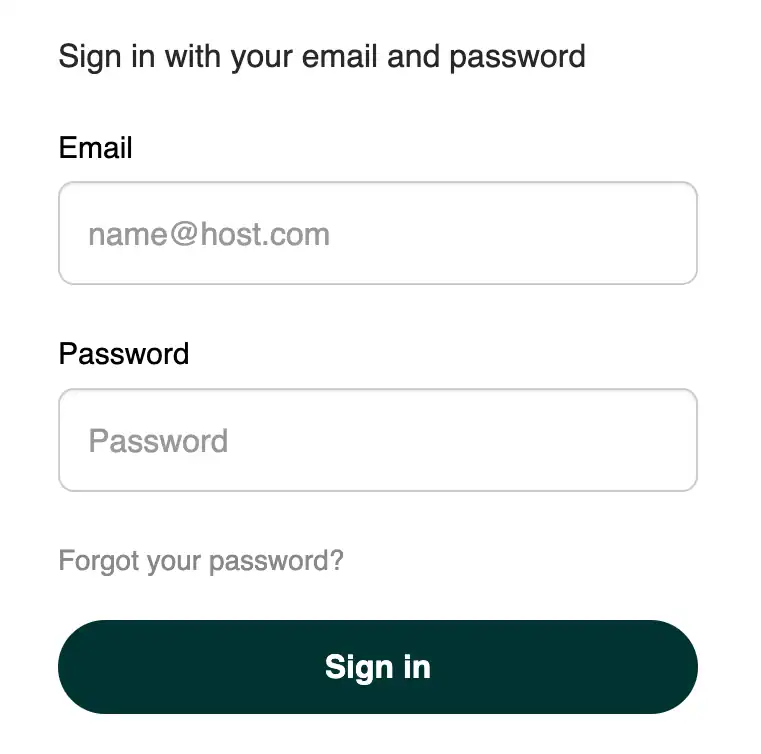
7. Sign in with your email and temporary password, then set a new one.
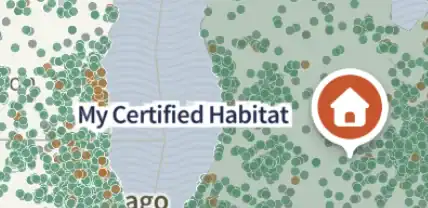
8. Click your habitat on the map.
Already on the map and certified
1. Sign in and click your habitat.
2. In the side panel, select Add it here under “Certify your wildlife habitat.”
3. On the Programs and Certifications tab, check My habitat is certified. Add your certification ID if you have it (optional).
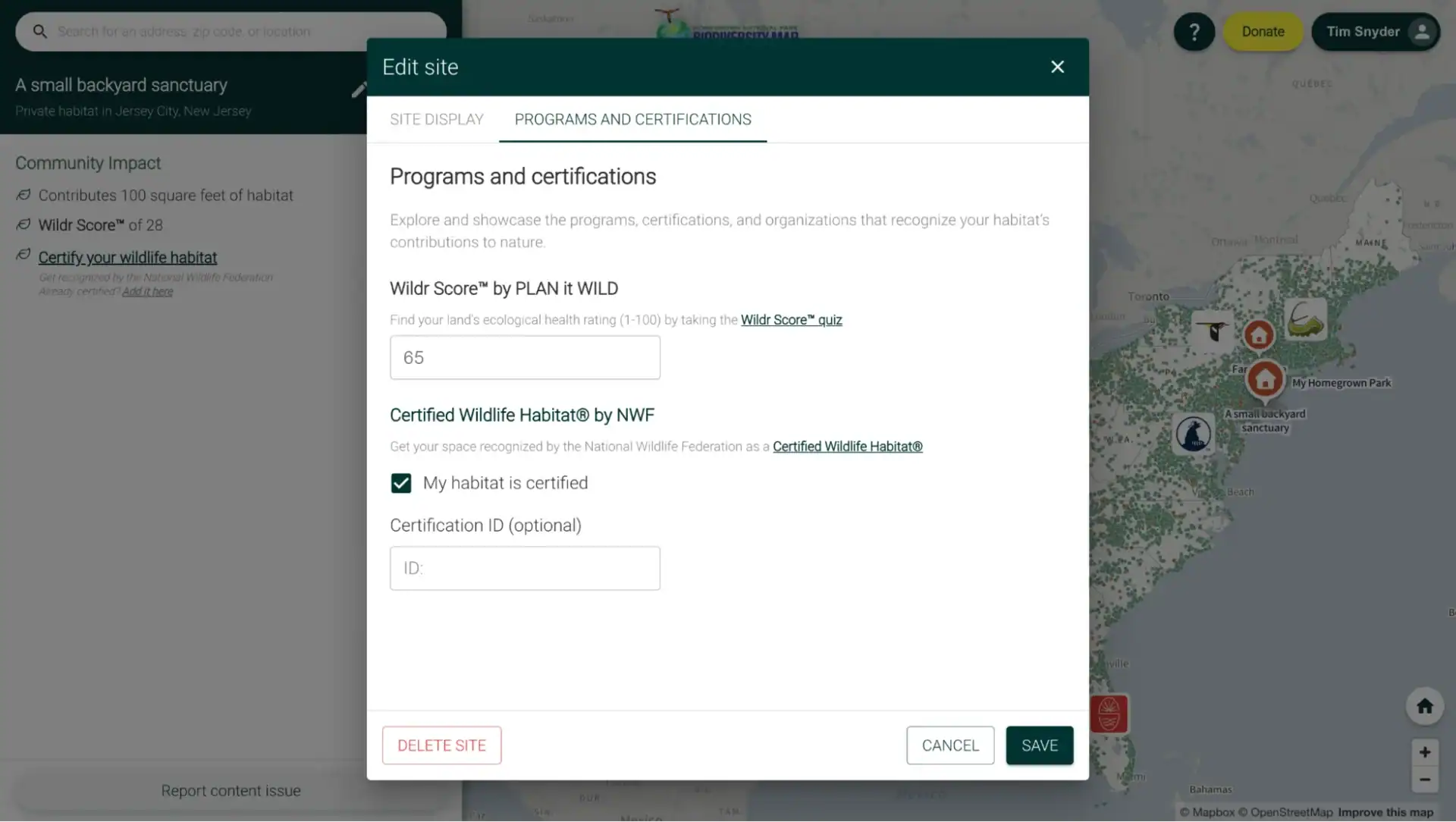
4. Save. The panel now shows your NWF certification.
Not certified yet
1. Click your habitat, then select Certify your wildlife habitat.
2. That takes you to NWF to certify.
3. Come back and follow the steps above to mark it on the map.