

A new feature on the native plant movement, and the restoration that gave Homegrown National Park its name.
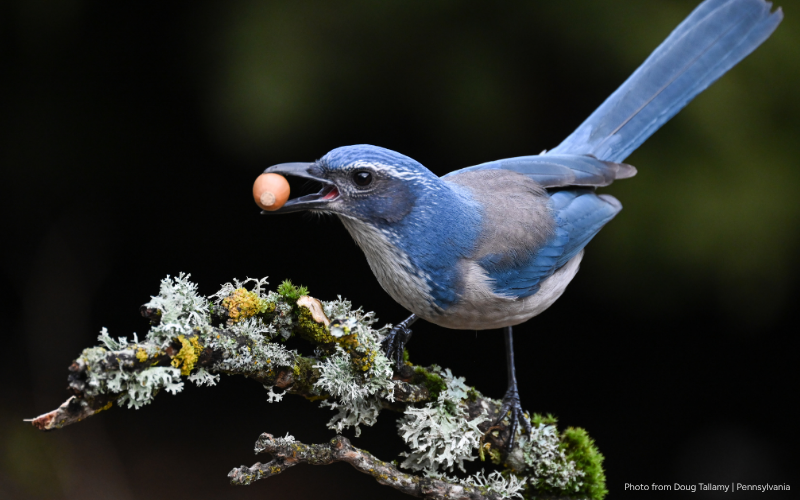
Cover photo by Doug Tallamy | Pennsylvania
Est Read Time: 5 min
If you've ever wondered what "planting native" actually adds up to, this is worth your time.
Read the full New York Times feature here.
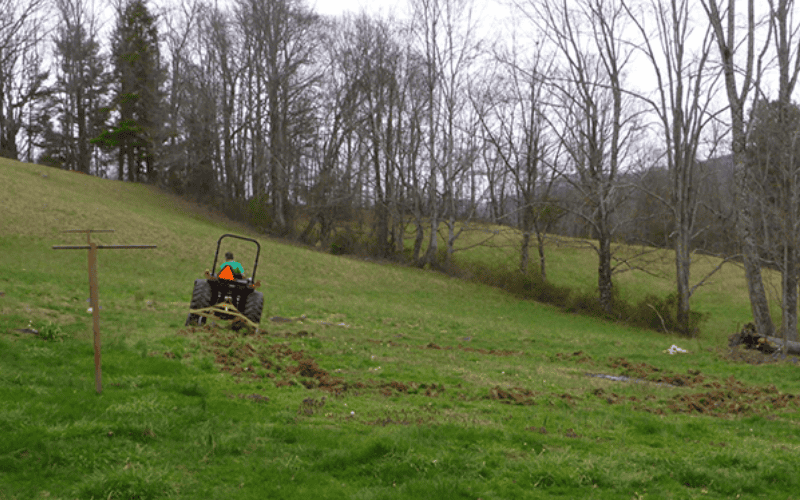
Journalist Ferris Jabr spent several days on the Pennsylvania property of our co-founder, Doug Tallamy — 10 acres that were once a tangle of invasive vines and mowed hayfield, and are now home to over 1,370 documented moth species and 62 breeding bird species. That's 44% of Pennsylvania's moths and 33% of its birds, on one piece of land, restored by one couple over three decades.
Jabr talked to more than 20 scientists and gardeners to understand how we got here, and where the science does and doesn't back up the movement's biggest claims.
What the Article Gets Right
The reporting backs up what we've been saying for years:
Native plants aren't optional extras; they're the base of the food chain.
Most leaf-eating insects can only eat a narrow set of plants they've coevolved with. Take away the natives, and you take away the food web everything else depends on.
A small number of plants do most of the work.
On average, just 14% of native species in a region support more than 90% of local butterflies and moths. Planting the right natives matters more than planting a lot of anything.
The results show up fast.
Yards landscaped primarily with native plants host 66% more bird species than conventional yards. One well-known study found Carolina chickadees could only sustain their populations when yards were at least 70% native.
This is bigger than any one garden.
Roughly 40 million acres of the U.S. are covered in ecologically empty turfgrass, much of it on private property. Restoring even half of that would create a connected patchwork of habitat larger than every national park combined.
Where It Pushes Back
We appreciate that the piece doesn't stop at the highlight reel. It also raises fair questions: some nonnative plants fill real gaps — feeding pollinators during seasonal bloom gaps, tolerating extreme climate swings native plants may struggle with, or simply giving gardeners food and flowers that matter to them too.
Our take: none of that changes the core finding. Native plants are still the foundation. But an ecologically responsible garden doesn't have to be a purity test. It has to support wildlife and meet our needs. That often means asking what a plant does, not just where it's from.
Gardening won't single-handedly solve the biodiversity crisis. The article is honest about that, too, and so are we. But your yard is the one piece of the planet you actually get to decide about. That's not everything. It's also not nothing.
The Reporter Tested It Himself
Jabr didn't just report on this from the outside, either. Partway through researching the piece, he started swapping nonnatives in his own garden for native trees, shrubs, and groundcover. Within weeks, he was seeing caterpillars, moths, and native bees that had never shown up in his yard before, even though the garden had already been lush and full of blooms for years. The difference wasn't more plants. It was the right ones.
This Isn't a Niche Movement Anymore
Maybe the most telling part of the piece isn't the science, it's who's paying attention to it. A major national newspaper spending days reporting on native plant restoration is itself a signal. The data backs it up too: according to surveys from the National Garden Association and the National Wildlife Federation, cited in the NYT piece, the share of U.S. gardening households buying native plants has ranged from about one in five to nearly one in three since 2019, and 82% of horticultural professionals report rising demand. What used to be a passionate niche is becoming a mainstream expectation.
That shift matters for the movement's future. The more this becomes common knowledge instead of specialist knowledge, the easier it gets to turn "one yard" into a connected, visible network of habitat, which is the whole idea behind Homegrown National Park.
Where to Start
You don't need 10 acres or three decades. You need one bed, one native tree, or one patch of lawn that you're willing to transform.
Choose plants that make a difference
Learn why native plants matter
Why remove invasive plants
Add your space to the Biodiversity Map
Read the full New York Times feature here
---
Homegrown National Park was co-founded by Dr. Doug Tallamy, whose research on native plants and insect biodiversity is featured throughout the article.