

By Dee Salomon, Board President, Homegrown National Park
Original, full article published in The Ungardener
Some plants do more than look beautiful. They hold ecosystems together.
These are keystone plants — the species that wildlife depends on most. Not just for pollen or nuts, but for something more fundamental: their leaves.
Butterfly and moth caterpillars, in their larval stage, can only eat the leaves of very specific native plants. That's not a small detail. It's the hinge the whole food web turns on.
Here's why: a pair of chickadees needs roughly 6,000 to 9,000 caterpillars to raise a single brood of young. And chickadees aren't unique. Nearly 96% of terrestrial birds feed insects to their nestlings, with caterpillars serving as one of the most important food sources. No caterpillars means fewer birds. It's that direct.
As native plants disappear, caterpillar populations fall. As caterpillars fall, so do the birds that depend on them. The food web doesn't collapse all at once. It unravels, link by link.
Planting keystone species helps reverse that. A serviceberry supports 119 caterpillar species. Pussy willow supports more than 400. Oak supports more than 500. These aren't rare or hard-to-grow plants. They're the backbone of a functional ecosystem, and they belong in our yards and communities.
Some keystone plants, like serviceberry and pussy willow, are relatively easy to find at nurseries. Others, like highbush blueberry and smooth blue aster, are harder to track down. Nurseries tend to stock what sells visually. Keystone plants don't always win on shelf presence. That's a problem worth solving.
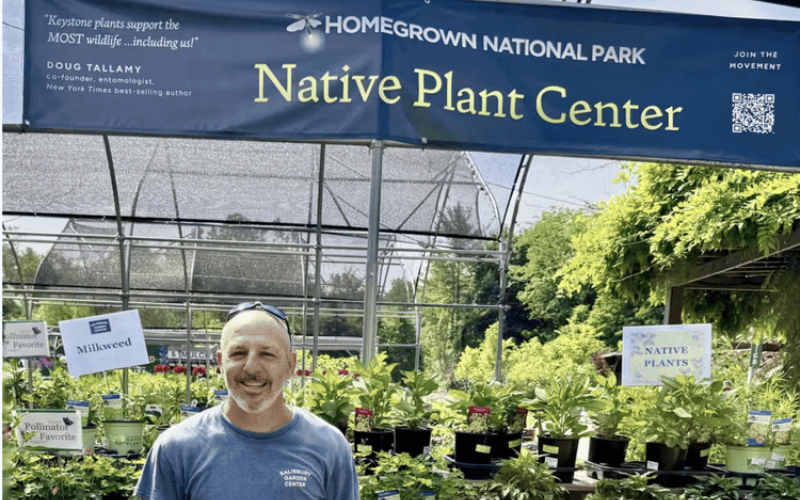
Which is why Homegrown National Park has been working with garden centers to change that. Through our Native Plant Center program, participating nurseries carry dedicated keystone plant inventory, with signage that explains what each plant supports: its growing conditions, the butterflies and birds it feeds, and why it matters. QR codes connect shoppers directly to more information and to the HNP Biodiversity Map, where they can log their planting and become part of the larger movement.
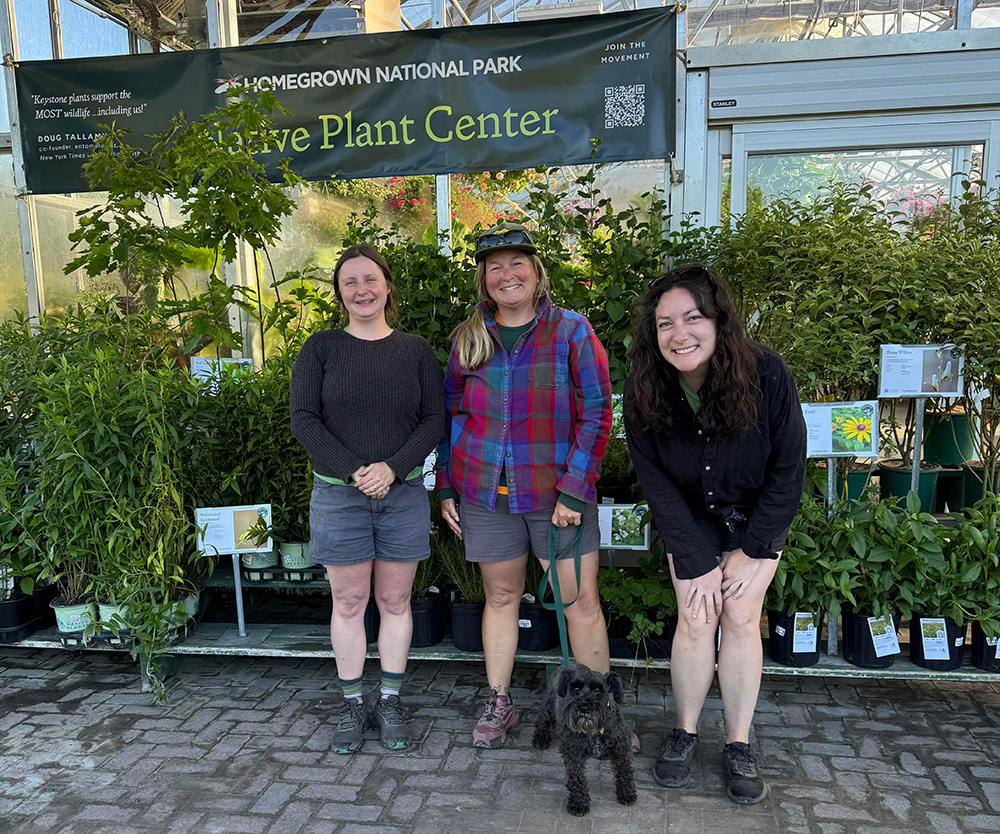
This program started as a pilot. The goal is to expand it, making it easier for anyone, anywhere, to find and plant the species that do the most good.
If your local nursery doesn't carry keystone plants yet, ask for them.
And if you're ready to start planting, add your space to the Biodiversity Map. Every yard counts.
Add your space to the Biodiversity Map
Find keystone plants for your area
Why plant native?